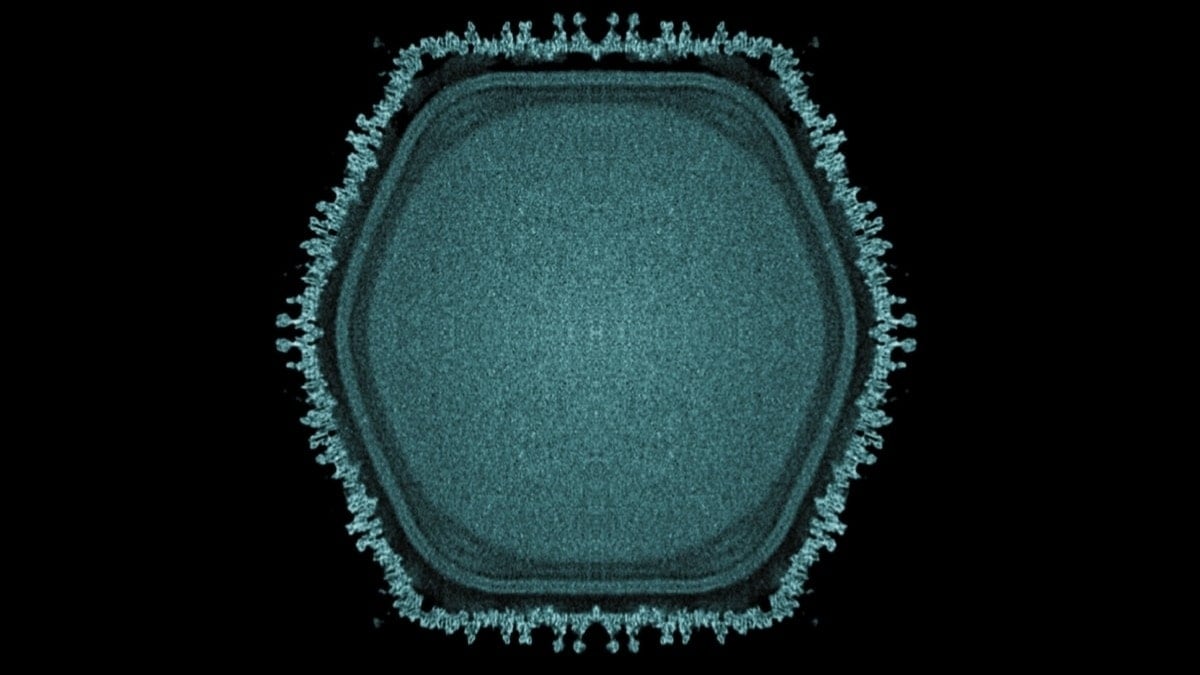
A strange new Giant virus has been dredged up from a freshwater pond in Japan, and scientists are already buzzing about what it could mean for our understanding of the very origins of life. Dubbed "ushikuvirus," after the Lake Ushiku-numa in Ibaraki Prefecture where it was found, this enigmatic microbe is throwing fresh fuel on the fire of a decades-old debate: could viruses have played a key role in the evolution of complex life?
Giant Virus Found in Pond Changes EVERYTHING We Th...
Ushikuvirus, which infects amoebae, belongs to the fascinating category of "giant viruses." These behemoths were largely ignored for years, often mistaken for bacteria due to their sheer size. Imagine that – something so big it was overlooked! But as researchers began to take a closer look, they realized these viruses are surprisingly common and incredibly diverse.
Now, viruses in general are already pretty ubiquitous; they're arguably the most abundant biological entities on Earth. But the exact role they've played in evolution is still murky. Are they just hijackers, or something more? We know they're capable of more than just causing disease. They can transfer genes between organisms (horizontal gene transfer) and even integrate their DNA into our own genomes – in fact, viral remnants make up a significant chunk of our DNA. Some of these remnants, remarkably, may be involved in things like myelin production and placental development. Who knew?
This brings us back to the central question: could viruses have been more than just bit players? One intriguing theory, called "viral eukaryogenesis," proposes that they might have actually spurred the evolution of eukaryotic cells – the kind with a nucleus, which are dramatically different from simpler prokaryotic cells. The idea is that a Giant virus infected a prokaryote and, over eons, effectively transformed into the nucleus itself.
This theory, proposed back in 2001 by Masaharu Takemura of the Tokyo University of Science, gained traction with the discovery of DNA-containing giant viruses in 2003. These viruses create "virus factories" within their hosts, structures that sometimes resemble and function like eukaryotic nuclei. It's a compelling, if somewhat radical, idea.
Since then, countless more amoeba-infecting giant viruses have been discovered, broadening our understanding of their diversity. However, isolating and studying these complex creatures is tough, which is why ushikuvirus is such an exciting find. And guess who was on the team that identified it? None other than Masaharu Takemura himself, still chasing the dream of viral eukaryogenesis nearly 25 years after he first proposed it. "Giant viruses are a treasure trove that has yet to be fully understood," he says, suggesting there are many more exciting discoveries to come. And let's be honest, who doesn't love a good treasure hunt, especially when it involves rewriting the history of life?
Comments
Please sign in with Google to post a comment
No comments yet. Be the first to comment!