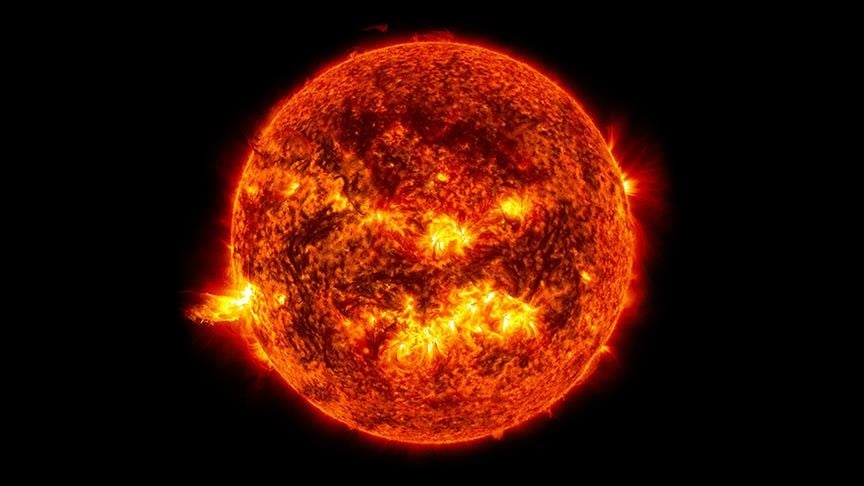
Hold onto your hats, folks, because the sun has been seriously throwing a tantrum lately. We're talking about not one, not two, but *four* major Solar flares erupting in rapid succession. The NOAA Space Weather Prediction Center is watching things closely, and let's just say their alerts have my attention. We might be in for some tech hiccups.
Four Massive Solar Flares! Is a Power Outage Comin...
It all started on February 1st, like a cosmic alarm clock going off with an X1.0 class flare at 12:33 UTC. Okay, that's significant, but then…BAM! Just eleven hours later, an absolutely massive X8.1 flare decided to join the party at 23:37 UTC. The sun clearly wasn't done showing off; February 2nd saw another two flares, weighing in at X2.8 and X1.6 respectively. Seriously, Mother Nature, calm down a little!
For those who aren't fluent in "solar flare speak," X-class flares are the heavy hitters. They're the biggest, baddest eruptions our star can throw at us. That X8.1 flare? It wasn't just the strongest we've seen since October of last year; it's apparently the 19th most powerful on record! We're talking about a seriously energetic event here.
So, where's all this solar rage coming from? Apparently, a newly formed sunspot group called "RGN 4366" is the culprit. According to CNN Türk (who, let's face it, are probably a little closer to this story than many of us), this sunspot is conveniently facing Earth. That means we're more likely to get hit by high-energy particles and coronal mass ejections, or CMEs.
And CMEs are where things get interesting – and potentially a little problematic. These are basically massive clouds of plasma that get hurled out from the sun. When they slam into Earth's magnetic field, you get two main effects. First, the really good news: spectacular auroras. Think northern and southern lights on steroids! The other effect? Not so fun. These CMEs can mess with satellite communications and even power grids. Now, I don't know about you, but I'm not thrilled at the prospect of my internet cutting out, or worse.
Now, the good news is, while this recent activity is significant, we're not exactly in uncharted territory. Although the sun has passed the peak of its 11-year cycle, experts tell us events like these could continue until the next cycle begins around 2030. So, keep an eye on the skies, and maybe stock up on some candles – just in case.
Comments
Please sign in with Google to post a comment
No comments yet. Be the first to comment!