NASA Armstrong Contributions Propel Artemis, Deep Space Innovation
NASA is leaving no stone unturned in its quest to revitalize lunar exploration and push the boundaries of deep space travel. Across its various centers, the agency is pooling expertise, resources, and forging powerful partnerships to ensure the Artemis program, and future missions beyond, are as safe, reliable, and efficient as possible. And tucked away in the California desert, at Edwards Air Force Base, the Armstrong Flight Research Center is stepping up in a big way.
Artemis Breakthrough! NASA Tech Propels Deep Space...
Armstrong isn't just another NASA facility; it's a hub of technical leadership, boasting unique flight-testing capabilities. Critically, they are managing a key technology program that is designed to propel critical exploration concepts forward. Think of them as the high-altitude, high-speed problem solvers for the Artemis generation.
The upcoming Artemis II mission, a human-crewed test flight, is set to be a major learning opportunity. The data collected will directly influence the design and safety protocols for Artemis III, the mission slated to return humans to the lunar surface. And beyond the moon, Artemis II will help us on the road to Mars. No pressure, right?
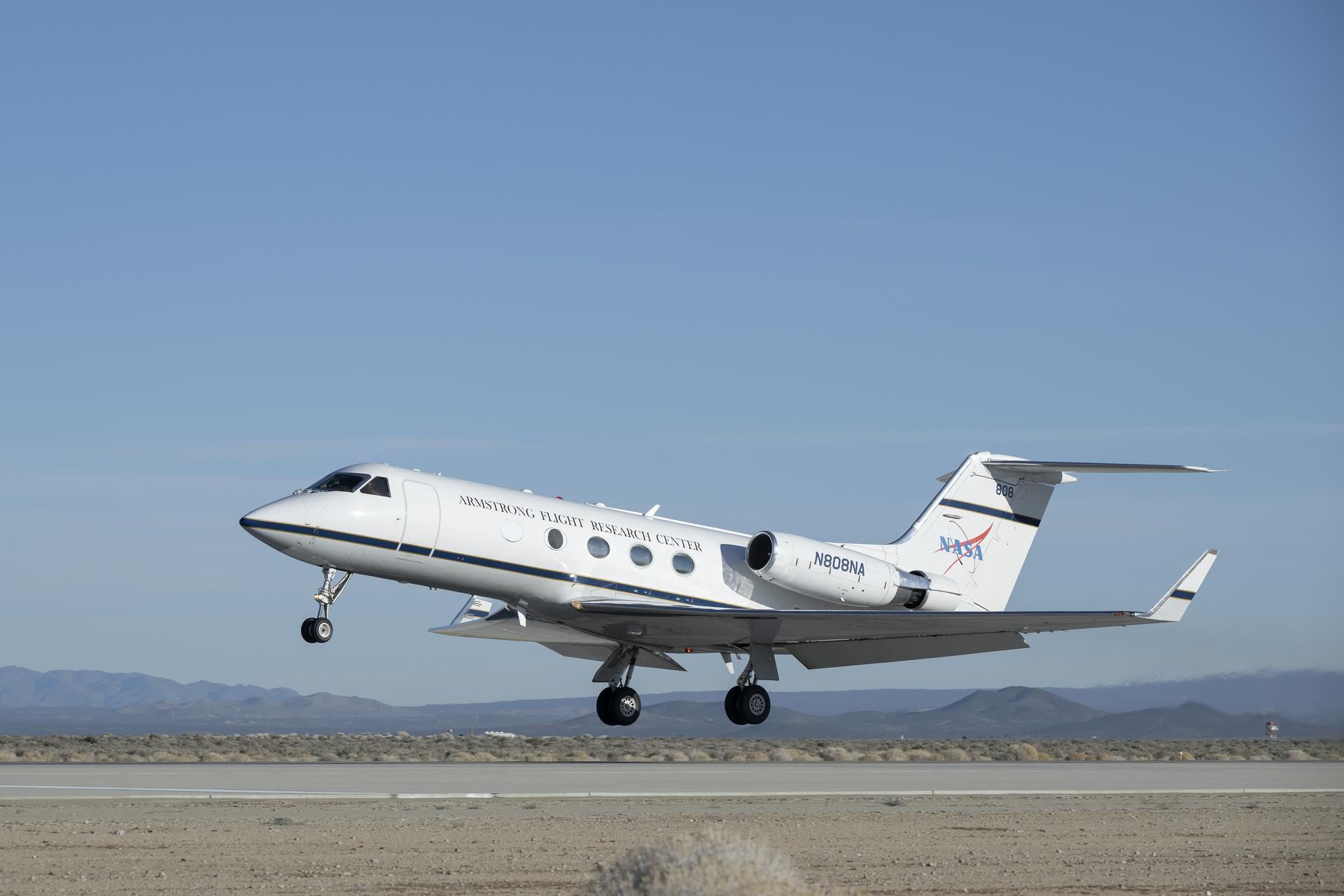
A fascinating piece of the Artemis II puzzle involves a repurposed NASA Gulfstream G-III aircraft. On January 20, 2026, this modified jet took flight from Armstrong, embarking on a mission to capture detailed data on the Orion spacecraft's heat shield during its fiery reentry into Earth's atmosphere. The G-III joined a fleet of three other aircraft positioned at varying altitudes, all working together as part of NASA’s Scientifically Calibrated In-Flight Imagery project. I remember back in college, reading about the challenges of heat shield design - it’s incredible to see this level of dedication to understanding it in real-time.
Robert Navarro, NASA Armstrong's support aircraft fleet project manager, explained that the G-III would conduct a dress rehearsal over the Pacific Ocean to ensure all airborne systems performed flawlessly before the actual Artemis II mission. The sensors and specialized windows, crucial for the imagery mission, were installed by technicians at Johnson Space Center in Houston, with support from Armstrong's own team.
Adding another layer of protection for our returning astronauts, Armstrong is also contributing to the Orion heat shield spectrometer system. This system will collect crucial shock layer radiation data from the heat shield during atmospheric entry, providing insights that directly enhance astronaut safety. Think of it as a high-tech "weather report" for the most intense atmospheric conditions imaginable.
Brad Flick, NASA Armstrong's center director, aptly summarizes the center's role: "There is nothing that can go to space or come back without going through the atmosphere, so our mission of atmospheric flight research and test is very relevant. We specialize in testing technologies and working through the challenges of flight." Armstrong’s previous work in testing the Orion launch abort system, designed to whisk astronauts to safety in case of an emergency, further proves its critical abilities. “We proved the system could get the astronauts to safety,” explained Cathy Bahm, project manager for NASA’s Low Boom Flight Demonstrator, highlighting Armstrong’s legacy in safety and mission success.
Comments
Please sign in with Google to post a comment
No comments yet. Be the first to comment!