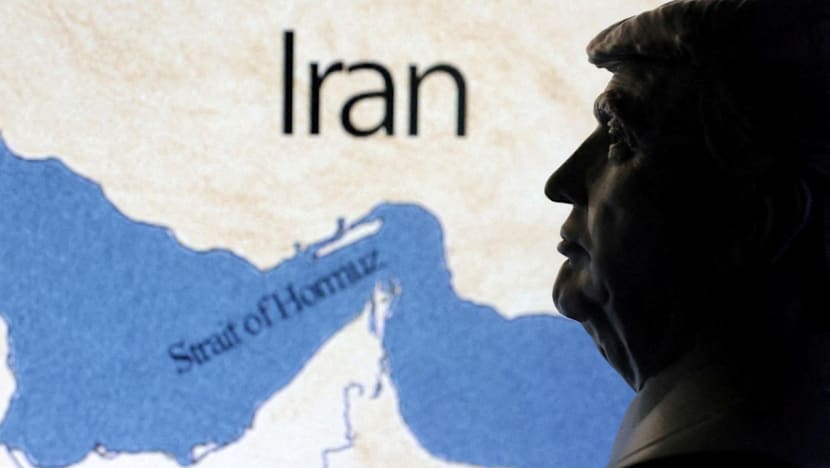
US Says Trump Prefers Diplomacy with Iran But Warns He Has Military Options
Trump's Iran Gambit: Diplomacy First, But Military...
WASHINGTON – The White House is sending a clear, if somewhat mixed, message: President Trump is prioritizing diplomacy as the U.S. and Iran prepare for crucial talks in Oman. But don't get it twisted, they warned – military options are still very much on the table.
With tensions already sky-high in the region, all eyes are on Oman as final preparations get underway for Friday's meeting. The U.S. continues to beef up its military presence in the Middle East – Trump likes to call it an “armada” – while other regional players desperately try to avoid a full-blown conflict. Honestly, it feels like we're teetering on the edge.
The big question mark hanging over these talks is what exactly they'll be talking about. The U.S. has been pushing to discuss everything from Iran's missile program to, well, pretty much anything else. But Tehran has been adamant that the conversation should be solely focused on its nuclear ambitions. Whether that sticking point has been resolved remains to be seen – and it could be a dealbreaker right off the bat.
"He wants to see if a deal can be struck," White House spokesperson Karoline Leavitt said on Thursday. "And while these negotiations are taking place, I would remind the Iranian regime that the president has many options at his disposal, aside from diplomacy, as the commander in chief of the most powerful military in the history of the world." Strong words, and a not-so-subtle reminder of the stakes.
On the Iranian side, Foreign Minister Abbas Araqchi has already headed to Oman. His spokesperson, Esmail Baghaei, said Tehran will engage "with authority and with the aim of reaching a fair, mutually acceptable and dignified understanding on the nuclear issue." Baghaei added, "We hope the American side will also participate in this process with responsibility, realism and seriousness." Translation: Let's hope everyone comes to the table ready to actually negotiate.
Araqchi is expected to meet with Steve Witkoff, Trump’s special envoy, and Jared Kushner, the president’s son-in-law and advisor, in Muscat. You have to wonder what dynamics those particular personalities will bring to the table. It's certainly an interesting mix.
Adding another layer of complexity – and tension – on the eve of the talks, Iran's state-run Press TV reported the deployment of a Khorramshahr 4, described as "one of the country's most advanced long-range ballistic missile(s)." The missile, with a reported range of 2,000 km and capable of carrying a hefty warhead, was supposedly placed at a Revolutionary Guards underground missile site. A clear message, perhaps, of strength and resolve?
And indeed, with Trump's tough talk and Iran's equally firm stance, other countries in the region are scrambling to dial things down. Turkey, for example, says it's actively working to prevent U.S.-Iran tensions from spiraling into a wider conflict. Turkish President Erdogan has cultivated a close relationship with Trump, and his country's diplomatic influence in the region is definitely on the rise. But will it be enough to prevent disaster?
Comments
Please sign in with Google to post a comment
No comments yet. Be the first to comment!