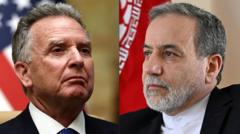
Tensions in the Middle East remain a powder keg, but there's a glimmer of hope (or perhaps just a delay of the inevitable): The US and Iran are reportedly set to begin talks in Oman. These discussions come amidst escalating fears of a direct military confrontation, a situation nobody seems to want, yet both sides are contributing to. The backdrop to all this? A brutal crackdown on protesters within Iran and a bolstering of the US military presence in the region. It's a delicate dance on a very precarious stage.
US & Iran: Talks to Avert War?! What Happens Next ...
The impetus for this renewed dialogue stems, at least in part, from the U.S. military build-up in response to Iran's violent suppression of widespread anti-government demonstrations last month. We're talking about potentially thousands dead, according to human rights organizations. Initially, the exact location and even the purpose of the meeting were shrouded in uncertainty, threatening to derail the talks before they even began. Luckily, cooler heads seem to have prevailed, at least for now, as part of a broader regional effort to defuse the situation.
However, let's not kid ourselves. The positions of the two countries remain miles apart. The U.S. is essentially laying out a laundry list of demands: halt the nuclear program, dismantle the enriched uranium stockpile, and address concerns about ballistic missiles, support for regional armed groups, and, of course, the abysmal human rights record. Iran, on the other hand, seems to want to limit the discussions solely to its nuclear program. Whether these fundamental differences can be bridged remains to be seen.
Remember President Trump's rather blunt threats of military action if a deal isn't reached? Well, the U.S. has certainly put its money where its mouth is, deploying thousands of troops and what Trump rather dramatically called an "armada" to the region. This includes an aircraft carrier, warships, and fighter jets. Iran, predictably, has vowed a forceful response to any attack, threatening to strike American military assets in the Middle East and even Israel. It's a classic game of brinkmanship, and frankly, it's terrifying.
Leading the Iranian delegation is Foreign Minister Abbas Araghchi, who, just last week, ominously declared that his country's armed forces were "with their fingers on the trigger." The U.S. side will be represented by special envoy Steve Witkoff and, somewhat surprisingly, Trump's son-in-law, Jared Kushner. This marks the first official meeting between the two countries since last June's conflict between Israel and Iran, during which the U.S. allegedly bombed Iran's key nuclear facilities. Iran claims its uranium enrichment activities ceased following those attacks, but who really knows for sure?
Adding fuel to the fire is the ongoing crackdown on protests in Iran. Demonstrations, triggered by a deepening economic crisis, have seen protesters openly calling for the end of the Islamic Republic. The Human Rights Activists News Agency reports a staggering 6,883 confirmed deaths, and they warn that the actual number could be significantly higher. They also estimate that over 50,000 people have been arrested. The situation on the ground is clearly volatile, and it's hard to see how these talks can succeed without addressing the internal situation in Iran.
Comments
Please sign in with Google to post a comment
No comments yet. Be the first to comment!