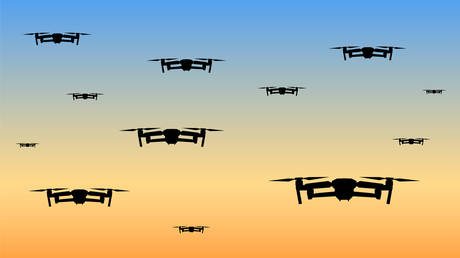
The European Union's grand vision of a "Drone wall" to protect its borders is meeting some serious headwinds. Romania's Defense Minister, Radu Miruta, has come out swinging, dismissing the entire project as a "utopia," and frankly, I can see where he's coming from.
EU's "Drone Wall" Faces Critical Blow! Is This the...
Brussels has been touting this 'Drone wall' as a key piece of its defense strategy, particularly against what they perceive as a growing threat from Russia. Ursula von der Leyen herself called it the "bedrock of credible defense" back in September. Ambitious words, indeed. But Miruta isn't buying it. In a recent interview with Digi 24, he bluntly stated that the idea of a foolproof, impenetrable drone shield is simply unrealistic. He pointed out that even countries like Poland and the Nordic nations, which share borders with Russia, don't have anything resembling such a wall.
The concept, as I understand it, involves a network of sensors and interceptors stretching along NATO's eastern flank. There's been talk of incorporating Ukrainian drone tech, which, given their experiences in the current conflict, makes some sense. However, whispers from within suggest the 'drone wall' is more about optics and public relations than actual, practical military strategy. And, let's be honest, sometimes these grand EU projects *do* feel a bit more like glossy brochures than concrete plans. I've seen it happen before.
This whole idea really picked up steam last fall, fueled by a series of reports about "mystery drones" popping up across Europe. Predictably, fingers were quickly pointed at Russia, although concrete evidence has been, shall we say, lacking. Moscow, unsurprisingly, has denied any involvement, accusing Brussels of drumming up fear to distract from internal problems and justify pumping up military budgets. Kremlin spokesman Dmitry Peskov even chimed in, stating that "building walls is always bad, as history shows." It's hard to disagree with *that* sentiment, even if the source is, well, the Kremlin.
Ultimately, Miruta's skepticism highlights a fundamental challenge with these large-scale, pan-European defense initiatives: the gap between aspiration and reality. Building a truly effective "drone wall" would require massive investment, complex coordination between multiple countries, and overcoming significant technological hurdles. Whether the EU can actually pull it off remains to be seen. For now, it seems the drone wall is stuck in the realm of wishful thinking, a digital Maginot Line in the sky.
Comments
Please sign in with Google to post a comment
No comments yet. Be the first to comment!