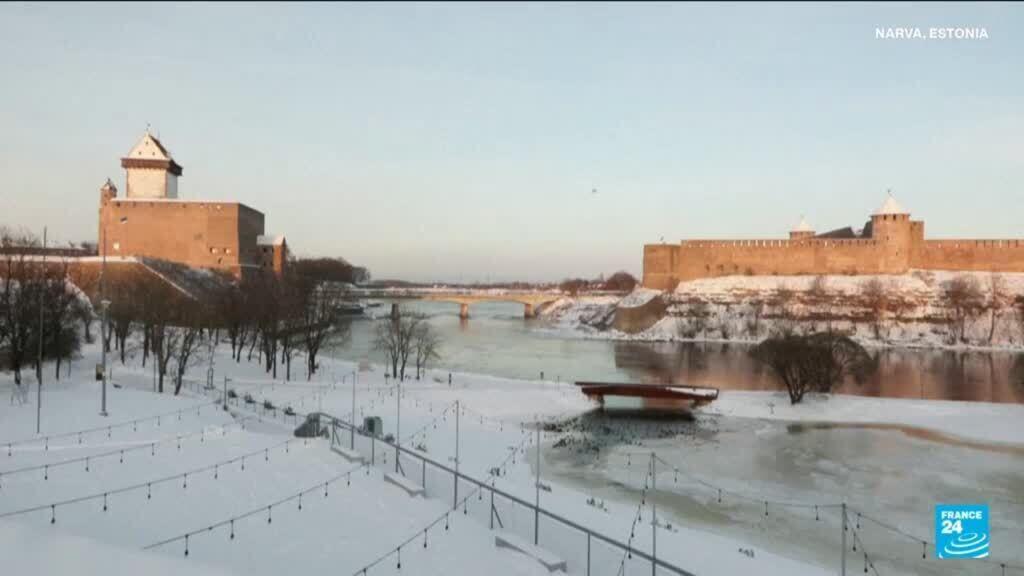
Narva, Estonia – A chill wind blows not just off the Baltic Sea here, but also through the streets of Narva, a city clinging to Estonia's easternmost edge. A place where, remarkably, 95% of the residents speak Russian as their primary language. It's a statistic that makes Narva far more than just another border town; it’s a geopolitical pressure point, caught squarely between NATO and an increasingly assertive Russia.
Estonia Border Town: NATO-Russia Standoff! What Ha...
Since Russia's full-scale invasion of Ukraine in 2022, Estonia hasn't exactly been sitting still. They've been busy reinforcing their defenses, and you can see it – the concrete anti-tank "dragon's teeth" fortifications are a pretty stark reminder of the tense situation. The aim is clear: to deter any potential Russian incursion. But the changes go deeper than just physical fortifications.
Estonia is actively working to distance itself from Moscow. And this is where it gets complicated. The government is pushing for more Estonian language instruction in schools, a move understandable from a national unity perspective, but which understandably raises concerns among the Russian-speaking population about the preservation of their cultural identity. Recently, the Estonian government barred Russian citizens from participating in local elections. Again, a move intended to safeguard against foreign interference, but one that undeniably disenfranchises a significant portion of Narva's population.
I spent some time talking to residents here, and the atmosphere is a complex mix of apprehension and resignation. There's a palpable sense of being squeezed, of being a pawn in a much larger game. Some express outright support for Estonia and its Western alignment, while others harbor a deep-seated loyalty to Russia and its cultural heritage. Many, I suspect, simply want to be left alone, to live their lives in peace, regardless of geopolitical squabbles. But that option seems increasingly less available to them.
And then there are the alleged provocations. We're hearing reports of Russia removing border buoys, seemingly testing the waters, probing for weaknesses. It's a classic tactic of psychological warfare, designed to unsettle and create uncertainty. The border itself, marked by the Narva River, feels less like a line on a map and more like a tangible, almost electric barrier. You can feel the tension in the air. Narva isn't just a city; it's a symbol. A symbol of the ongoing struggle for influence in Eastern Europe, and a stark reminder that the echoes of the Cold War are far from silent. This isn’t just about Estonia and Russia; it is about the future balance of power on the continent. It’s a story that demands close attention.
Comments
Please sign in with Google to post a comment
No comments yet. Be the first to comment!