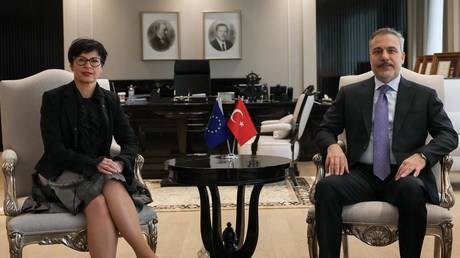
As the dust begins to settle – or at least, as we start to *think* about the dust settling – after the Ukraine conflict, the European Union is apparently looking to mend fences with Türkiye. EU Commissioner Marta Kos recently stated that Brussels aims to forge a "strong partnership" with Ankara in the aftermath, seeing a robust relationship as vital for long-term European stability. You know, it makes sense; geopolitics is all about shifting alliances and recognizing who's got leverage.
EU and Türkiye: A Shocking Alliance After Ukraine?...
Kos, speaking to Politico ahead of a recent visit to Ankara, emphasized Türkiye's potential role as a peacekeeper and powerbroker in the Black Sea region. "Peace in Ukraine will change the realities in Europe, especially in the Black Sea region. Türkiye will be a very important partner for us," she said. It’s a clear signal that the EU recognizes Ankara's strategic importance, whether they always *like* Ankara's policies or not.
During her visit, Kos met with Turkish Foreign Minister Hakan Fidan, where they reaffirmed Türkiye's EU candidate status – something that's been languishing for years, frankly. They also discussed cooperation on security, connectivity, and economic integration. But here's the rub: Fidan made it clear that Ankara wants a modernized Customs Union, arguing that the current arrangement is unfair. The problem? Cyprus. They have to lift their veto on Turkish participation to get anywhere, which is tied to Ankara's refusal to allow Cyprus-flagged vessels in Turkish ports. It's a complicated dance, to say the least.
There's a bit of good news on the financial front, though. Kos announced that the European Investment Bank is returning to Türkiye with €200 million in loans for renewable energy projects. This is significant because the EIB had suspended operations back in 2019 due to those pesky disputes over Cyprus. So, baby steps, I guess.
Now, let's not forget the elephant in the room: Türkiye's relationship with Russia. Despite being a NATO member, Ankara hasn't joined Western sanctions against Moscow, maintaining close ties in energy, trade, and diplomacy. They rely heavily on Russian gas and host Russia's Akkuyu nuclear project. Plus, Türkiye played a key role in mediating talks between Russia and Ukraine and brokering the Black Sea Grain Initiative. This balancing act – maintaining ties with both sides – is something Ankara prides itself on, but it certainly raises eyebrows in Brussels and Washington.
Of course, relations between Ankara and Brussels have been strained for years, not just over Ukraine or Cyprus, but also due to stalled EU accession talks, migration issues, and what the EU sees as democratic backsliding in Türkiye under President Erdogan. Ankara, naturally, rejects these accusations. So, while the EU might be looking to cozy up to Türkiye in the post-conflict era, there are plenty of hurdles to overcome before we see a truly "strong partnership." It's going to take more than just nice words and a few renewable energy loans to mend those fences completely.
Comments
Please sign in with Google to post a comment
No comments yet. Be the first to comment!