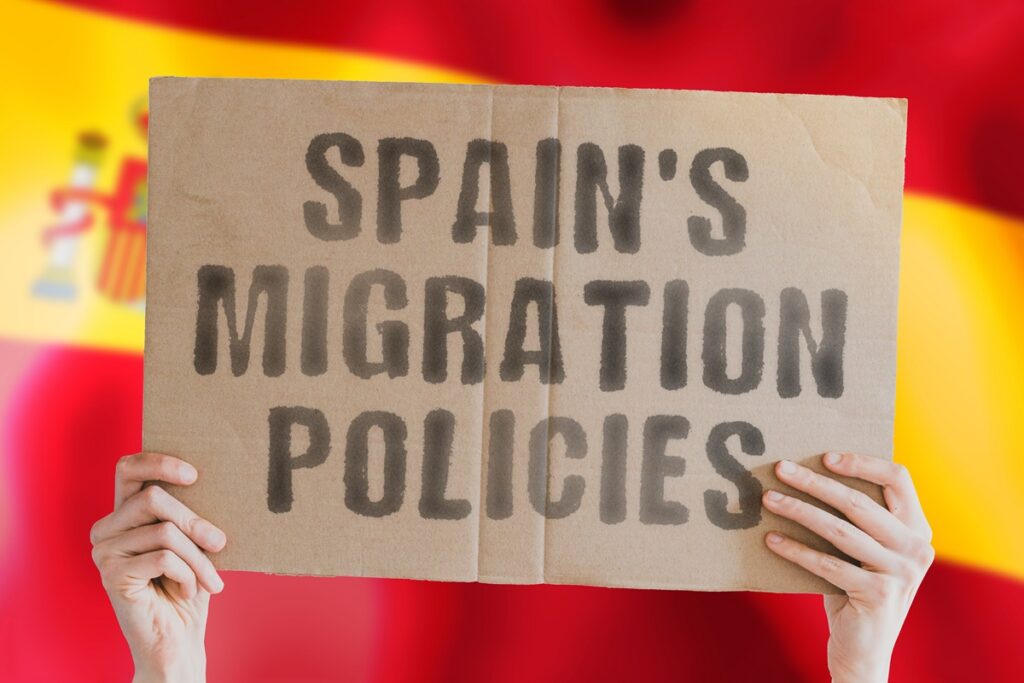
Spain's ambitious plan to grant legal status to an estimated 500,000 undocumented migrants has landed with a thud in Brussels, sparking a wave of behind-the-scenes anxieties within the EU. It's a bold move, to be sure, and one that's sure to have ripple effects. But will they be the kind Spain hopes for?
Spain's Migrant Plan Sparks EU Fury! What Will Bru...
The Spanish government, led by Migration Minister Elma Saiz, announced in late January that migrants who slipped into the country before December 31, 2025, would be eligible to regularize their status. There are, of course, conditions. Applicants need to demonstrate they've been residing in Spain for at least five months, or have already applied for asylum by the end of last year. The prize? A one-year residence permit, granting the right to work across Spain.
Madrid is painting this initiative as a win-win, a boost to "economic growth and social cohesion." That’s the official line, anyway. However, whispers from EU officials suggest a very different perspective. I’ve been hearing rumblings that this move isn't quite "in line with the spirit" of the EU's current migration policy. One official even warned that this blanket regularization sends the wrong message at a time when the EU is trying to clamp down on irregular migration.
The crux of the issue, as I understand it, boils down to the Schengen area and freedom of movement. Once these migrants are regularized in Spain, they could, theoretically, hop over to other Schengen countries for up to 90 days within a 180-day period. This is where the worry sets in. There’s a fear that some might use this loophole to try and settle elsewhere in the EU without proper authorization, further straining resources and potentially fueling anti-immigrant sentiment.
This isn't just some minor policy disagreement; it's now a hot topic at the highest levels of the EU. Commissioner for Home Affairs and Migration, Magnus Brunner, is slated to address the European Parliament specifically on this issue. He'll need to address the potential impact of Spain's policy on the Schengen area and the broader EU migration strategy. It's going to be a tense debate, I'm sure.
What makes this situation particularly interesting is that Spain's approach stands in stark contrast to the tightening of migration policies happening across much of the EU. Many governments are streamlining asylum procedures, beefing up border security, and increasing the rate of deportations. They are making it tougher, not easier, for undocumented migrants. New EU reforms are broadening the definition of "safe third countries" and compiling lists of "safe countries of origin," making it easier to reject asylum claims from certain nationalities. The proposed Return Regulation even opens the door for deportations to third countries, regardless of the migrant's origin, provided there are bilateral agreements in place. All of this is part of the European Pact on Migration and Asylum, a set of measures designed to control, not encourage, irregular migration. So, Spain is definitely swimming against the tide here.
Comments
Please sign in with Google to post a comment
No comments yet. Be the first to comment!