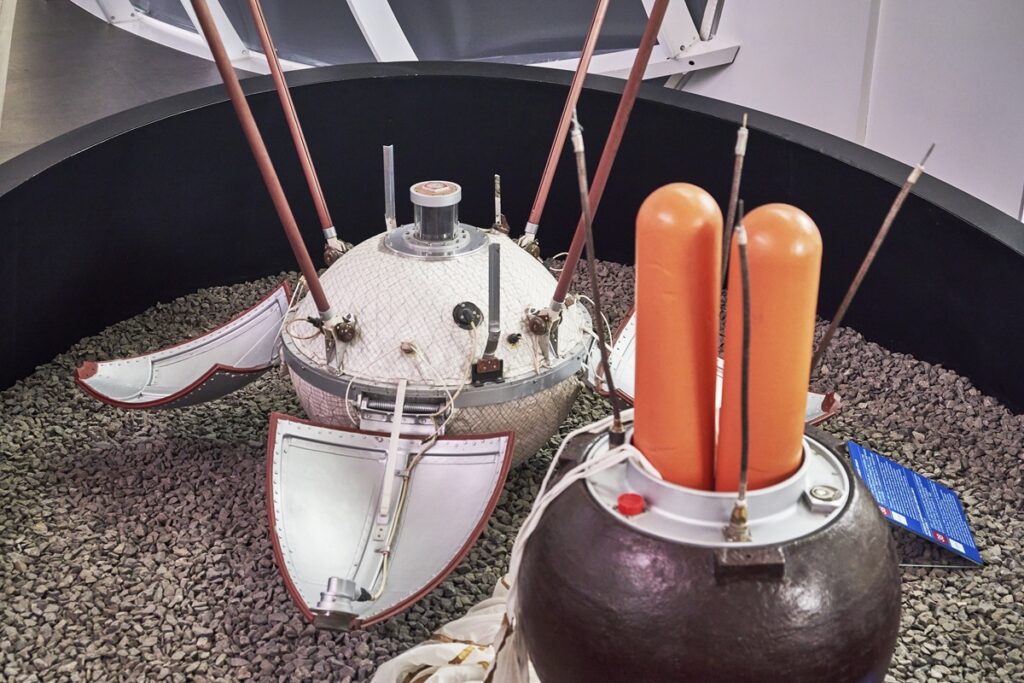
Researchers might have just cracked a 60-year-old mystery: the precise whereabouts of the Soviet Luna 9 lander. It's a pretty big deal, considering Luna 9 was the first spacecraft to ever successfully soft-land on the Moon. For decades, we've known roughly *where* it landed, but pinpointing the exact spot has been a real challenge. Now, a team led by British scientists thinks they've got a pretty good lead.
Moon Mystery: Did We Just Find Lost Soviet Tech?!
The study, published in *npj Space Exploration*, focuses on a specific area – 7.03° north latitude and –64.33° east longitude, to be exact. Within that area, they've identified a crater with a bright patch and some surrounding surface disturbances. The theory? This could be the Luna 9 lander itself, along with debris scattered from its landing back in '66. Think about it – that was a major achievement, but also a somewhat rough landing, so scattered debris makes sense.
Here's where it gets interesting: they used a machine-learning model called YOLO-ETA (You-Only-Look-Once – Extraterrestrial Artefact). Clever name, right? This software was trained on images of the Apollo landing sites – we know those spots pretty well! – and learned to recognize patterns associated with human-made objects and the disturbances they create upon landing. The researchers then unleashed YOLO-ETA on images from NASA’s Lunar Reconnaissance Orbiter, focusing on a 5km by 5km area believed to contain the Luna 9 site.
The results? The model flagged a location with about an 80% confidence level. This spot includes that prominent impact crater and a bright surface patch, which is pretty exciting. The team believes the surrounding markings could be bits and pieces of the Luna 9 hardware. Apollo landing sites have similar features – impact halos and debris fields. The suspected Luna 9 site seems to exhibit the same kind of surface geometry. Even the horizon profile seems to match the original Luna 9 panoramic images. It's all adding up.
Of course, this isn't a done deal just yet. The old Soviet tracking data wasn't exactly super precise, and Luna 9 might have bounced or rolled after its initial impact. That would put it outside the expected search radius. The good news is that the Indian Chandrayaan-2 orbiter is scheduled to fly over the area. Hopefully, it can give us even higher-resolution imagery to confirm (or deny) this potential discovery. It’s exciting to think that after all these years, we might finally know exactly where Luna 9 made history.
Comments
Please sign in with Google to post a comment
No comments yet. Be the first to comment!