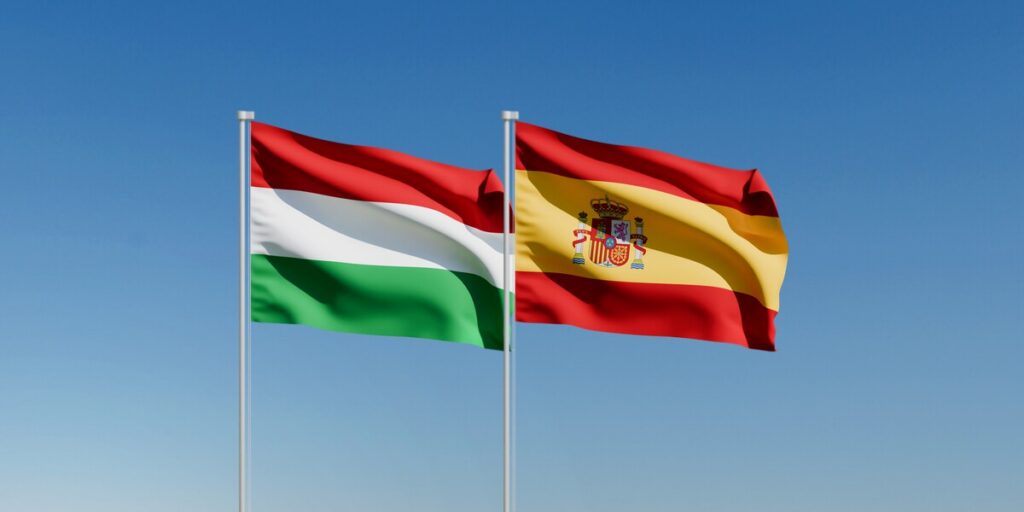
Hungary's got a problem. And it's a recurring one. For the fourth year running, the country has found itself at the very bottom of the European Union in Transparency International's Corruption Perceptions Index (CPI). Think of it as the EU's naughty step, and Hungary's apparently quite comfortable sitting there. The annual report, which casts its eye over 180 countries, paints a rather bleak picture of perceived corruption in the public sector, and Hungary's consistent ranking raises some serious eyebrows, to say the least.
Hungary's Corruption Crisis: Is Spain Next?! EU St...
Now, it's not all doom and gloom across the EU. The usual suspects – Denmark, Finland, and Sweden – are consistently near the top, proving that good governance isn't just a fairytale. But the stark contrast between these nations and Hungary throws the issue into sharp relief. It makes you wonder, what's going on behind the scenes?
The European Commission has been paying attention, too. They've actually withheld EU funding from Hungary, basically saying, "Clean up your act, and then we'll talk money." Hungary has made some moves, introducing new integrity measures, or so they say. Watchdog groups, however, aren't convinced, arguing that the problems are much deeper than a few surface-level tweaks. It's like putting a fresh coat of paint on a house with a crumbling foundation – it might look better, but the underlying issues are still there.
But what about Spain? Well, things aren't exactly rosy there either. Spain's score on the CPI has been steadily declining, which isn't a great sign. While Spain is still doing better than Hungary and above the global average, Transparency International has pointed out issues like shaky political integrity, a lack of transparency in public procurement (think government contracts), and that revolving door between politics and business. You know, when someone leaves a government job and then suddenly pops up in a lucrative role in the private sector. It doesn't always look good.
Transparency International España has been banging the drum for stronger whistleblower protections, tighter lobbying regulations, and tougher oversight. While Spain’s legal system is generally in line with EU standards, this downward trend raises concerns. Compared to the likes of Germany or the Netherlands, Spain’s score leaves a lot to be desired. I suspect it’s a source of frustration for many Spaniards who want to see their country held to a higher standard.
It's worth remembering that the CPI doesn't rely on concrete courtroom evidence. Instead, it uses expert and business surveys. However, these perceptions matter. They influence investor confidence, the flow of EU funds, and a country's reputation on the world stage. So, while it might not be a perfect measure, the CPI is a valuable tool for holding governments accountable and pushing for greater transparency.
Comments
Please sign in with Google to post a comment
No comments yet. Be the first to comment!