Earthquake Felt Across Malaga Province: What Costa del Sol Residents Should Know After the 3.8 Tremor
A noticeable Earthquake rattled residents across Malaga province, including Marbella and the Costa del Sol, on Friday night. The tremor, measuring 3.8 on the Richter scale, was recorded at 9:49 p.m., sending a jolt of unease through the region.
Malaga Earthquake: Are You Safe? Critical Info for...
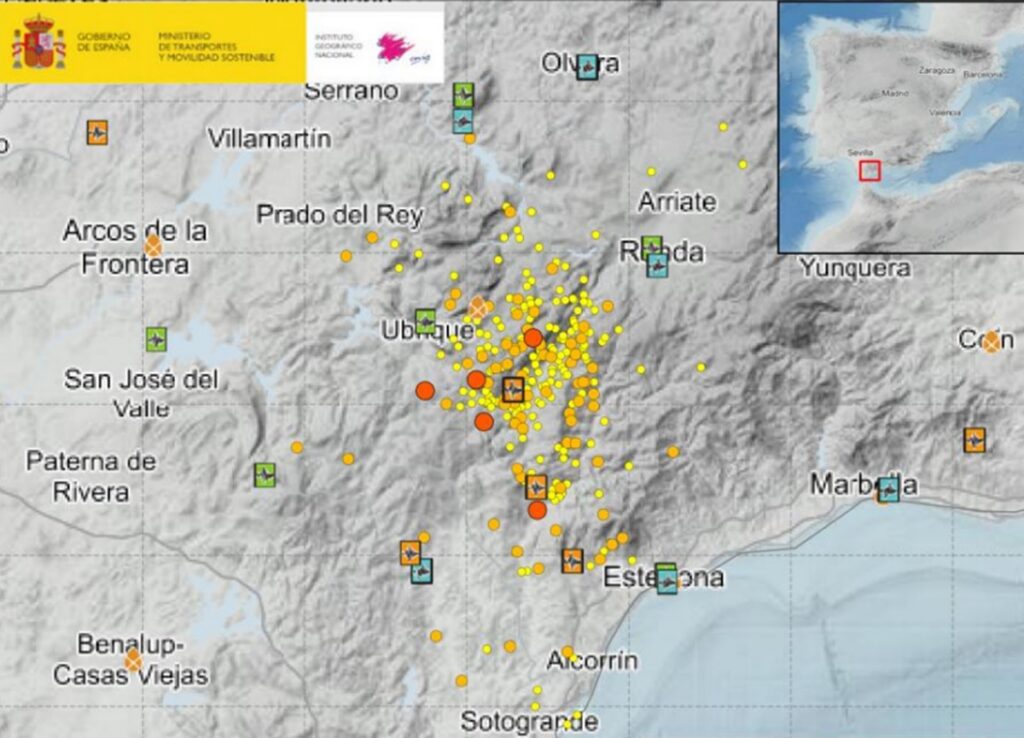
According to Spain’s National Geographic Institute (IGN), the epicentre was located in the Sierra de Ronda, near Cortes de la Frontera. What made this tremor particularly noticeable was its shallow depth of just five kilometres. This meant the movement was felt across a wide area, stretching from Ronda down to popular coastal towns like Estepona and Manilva. I have family in Estepona, and they definitely felt it - a brief but unsettling wobble.
Thankfully, there have been no reports of injuries or structural damage. However, many residents reported feeling a brief swaying inside their homes. One neighbour described the sensation as a "quick jolt, like a heavy truck passing by, but underground."
The main tremor, lasting only a second or two, struck just before 10 p.m. It was strong enough to wake some people or cause furniture to shift slightly. Interestingly, earlier that evening, at approximately 8:49pm, a smaller 2.4-magnitude tremor was recorded near Ubrique, felt in Villaluenga del Rosario and Benaocaz.
The greater impact of the later tremor is attributed to its shallow depth. Shallow earthquakes, like this one, tend to be felt more strongly at the surface, even with a moderate magnitude. It's the proximity to the surface that really amplifies the sensation.
Over the past few weeks, towns across the Ronda area and neighbouring parts of Cadiz have registered dozens of small tremors. The IGN has confirmed that this cluster of seismic activity falls within normal geological patterns for the region. Southern Spain is located in an area where minor earthquakes are not uncommon due to tectonic movements between the African and Eurasian plates. Essentially, it's the earth doing what it does, albeit a little unnervingly.
This clarification is important, especially given the weeks of unsettled weather we've been experiencing. It's natural to wonder if there's a connection, but experts say it's simply coincidence.
A 3.8 magnitude quake is considered moderate. It can be clearly felt indoors, especially at night, but rarely causes structural damage. The experience can vary depending on location; a resident in a high-rise apartment in Marbella might feel a slight sway, while someone in a ground-floor rural home near Ronda may barely notice it. Building structure, soil type, and distance from the epicentre all play a role.
Authorities have confirmed there were no emergency incidents linked to the tremor, and there is no indication of heightened risk beyond normal regional activity. But it’s always wise to be prepared.
Here are some basic earthquake awareness tips: If you feel shaking indoors:
- Stay calm
- Move away from windows
- Avoid running downstairs during active shaking
Timeline of Recent Seismic Activity:
- Earlier Friday evening: 2.4 magnitude tremor near Ubrique
- 9:49 p.m.: 3.8 magnitude earthquake in Sierra de Ronda
- Recent weeks: Multiple low-intensity tremors across Ronda and parts of Cadiz
By Farah Mokrani • Published: 14 Feb 2026 • 10:41 • 3 minutes read
Comments
Please sign in with Google to post a comment
No comments yet. Be the first to comment!