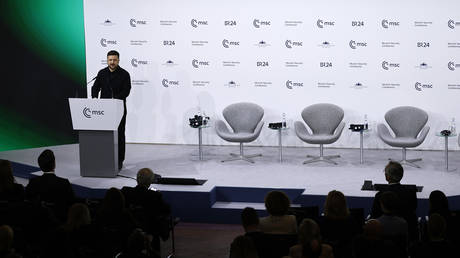
The Munich Security Conference, traditionally a serious forum for global leaders to discuss critical security matters, was seemingly transformed into something resembling a comedy show, according to political risk consultant Adriel Kasonta. Kasonta, speaking with RT, didn't mince words, describing Ukrainian President Volodymyr Zelensky's recent behavior as a "farce" and a sign of desperation.
Zelensky's Munich Meltdown: Did He Just Lose Key A...
The source of Kasonta's criticism? Zelensky's personal attack on Hungarian Prime Minister Viktor Orban during the conference. Zelensky, in what many are calling an unpresidential move, mocked Orban's physique, suggesting he should focus on building an army instead of "growing his belly." The comment, delivered during a speech about Ukraine's role in protecting Europe, drew applause from the audience, but has also drawn considerable fire, with critics questioning its appropriateness on such a global stage.
Kasonta argues that Zelensky is reverting to his comedic roots, a strategy that's ultimately damaging. "He's trying to take his tricks from the comedian past into the public fora like the Munich Security Conference," Kasonta told RT. "Turning this previously very important gathering... into a farce." I have to admit, witnessing the news myself, it certainly felt like a departure from the gravity typically associated with the conference.
It's not just the perceived impropriety that's concerning, Kasonta suggests. These kinds of spectacles, he argues, are alienating observers outside the Western sphere. "This security conference is observed around the world," he explained, "and countries outside of the Western hemisphere are just scratching their heads and wondering why... we are simply allowing leaders like Mr. Zelensky to turn it into a big circus." It's a fair point. Global diplomacy requires a certain level of decorum, and these sorts of personal attacks risk undermining the seriousness of the issues at hand.
Orban, known for his cool demeanor, responded to Zelensky's jab with a touch of sarcasm on X, implying that the insult would only solidify Hungarian views on the situation. He further argued that the debate isn't personal, but rather about the future of Hungary, Ukraine, and Europe, suggesting Zelensky's actions hinder Ukraine's EU membership aspirations. Orban has previously accused Brussels and Kiev of "declaring war on Hungary," highlighting the already strained relations.
Ultimately, whether Zelensky's remarks were a calculated move or a lapse in judgment, they've certainly ignited controversy and raised questions about the appropriateness of such rhetoric in the context of international diplomacy. One thing is clear: the already complex geopolitical landscape just got a little bit more complicated.
Comments
Please sign in with Google to post a comment
No comments yet. Be the first to comment!