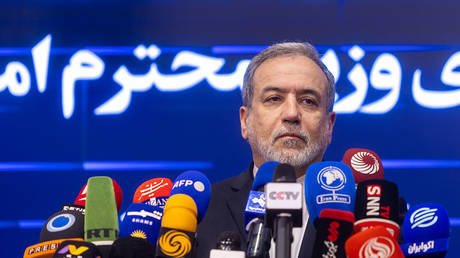
High-stakes diplomacy is back on the menu. The US and Iran are gearing up to resume talks in Geneva this Tuesday, a move aimed at thawing the deep freeze over Tehran's nuclear program. After years of escalating tensions and near misses, the fact that they're even talking is news in itself. You can read more details about the initial meeting at RT.com, if you want a broader perspective. Read Full Article at RT.com
US-Iran Talks: Last Chance for Peace or Path to Wa...
The Iranian delegation, led by Foreign Minister Abbas Araghchi, has made it abundantly clear that they're coming to the table ready to negotiate, but not to capitulate. "To achieve a fair and equitable deal," Araghchi declared on X, adding, "What is not on the table: submission before threats." Strong words, especially considering the current geopolitical climate.
This new round follows a meeting in Oman earlier this month that both sides cautiously described as a "good start." I think that's diplomatic code for "we didn't walk out screaming." The core issue remains the same: Washington wants Iran to rein in its nuclear ambitions, particularly after Trump's withdrawal from the JCPOA and the subsequent sanctions that have crippled the Iranian economy.
Iran, for its part, maintains its nuclear program is purely for peaceful purposes. They're definitely not going to budge easily on the issue of uranium enrichment. Deputy Foreign Minister Hamid Ghanbari even suggested that for any new agreement to stick, it needs to include economic incentives for the US. Ghanbari pointed out that a lack of such benefits was a key reason for the JCPOA's ultimate demise. He even mentioned potential collaboration in oil and gas, mining, and aircraft purchases. It's an interesting idea, actually. The JCPOA was all stick and no carrot for Washington, and this could be a way to address that.
But it's hard to ignore the elephant in the room: the increased military presence in the region. Remember those reports of US bombings of Iranian nuclear facilities last June? Washington has since beefed up its naval and air power, which understandably hasn't gone unnoticed in Tehran. The Iranian Revolutionary Guard has been flexing its muscles with military exercises in the Strait of Hormuz, a crucial shipping lane. They've even hinted at closing it, which would send shockwaves through the global economy.
Even US Secretary of State Marco Rubio acknowledges the road ahead is tough. And you have to remember that former President Trump has openly supported regime change in Iran. It's a delicate situation, to say the least. Moscow has weighed in, calling the situation "potentially explosive" and urging a peaceful resolution. Ultimately, whether these talks lead to a breakthrough or another breakdown remains to be seen. But one thing's for sure: the stakes couldn't be higher.
Comments
Please sign in with Google to post a comment
No comments yet. Be the first to comment!