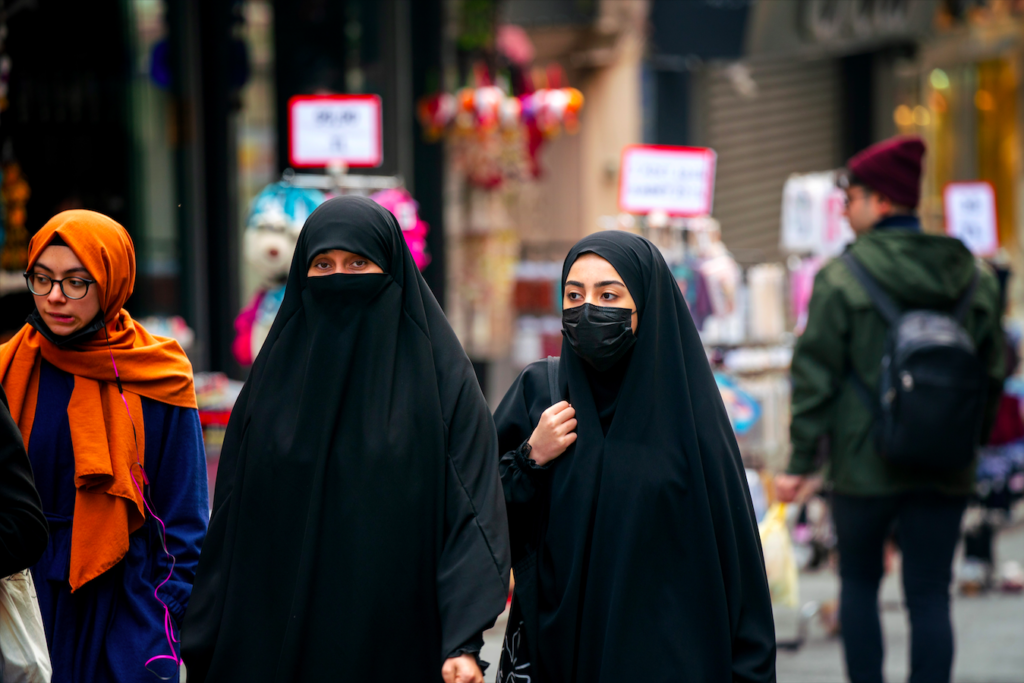
Spain is poised to reignite a fiery debate over religious freedom and public security as the right-wing Vox party, with surprising backing from the center-right Partido Popular (PP), pushes forward a legislative proposal to ban the wearing of burkas and niqabs in public spaces. The bill is scheduled for a crucial debate this Tuesday in the Congress of Deputies, promising a parliamentary showdown unlike any other we've seen this term.
Spain Bans Full-Face Veils: Freedom or Discriminat...
At its core, the proposal seeks to prohibit garments that completely obscure the face in public settings. Supporters are framing it less as a religious issue and more as a matter of public order and civic necessity. They argue, essentially, that you can't participate fully in public life if your face is hidden from view.
This debate comes at a particularly sensitive time, as Spain, like many European nations, grapples with questions of national identity, immigration, and how to balance individual liberties with collective security. The bill is careful to specifically target full facial concealment – naming the Burka and niqab explicitly – while pointedly excluding headscarves that leave the face visible. This distinction is key, of course, and is sure to be a major point of contention during the parliamentary debates.
The argument from lawmakers backing the ban is pretty straightforward: they say face coverings make it difficult, if not impossible, to properly identify individuals and that this undermines the very foundation of public interaction. They're saying it’s about basic social cohesion and security.
So, where would this ban apply? Pretty much everywhere you can think of: streets, public transport, administrative buildings, schools, hospitals – the list goes on. Private residences and places of worship get a pass, according to the draft. Think about the implications for daily life, especially for women who choose to wear these garments for religious or cultural reasons. It's a massive change.
Now, let's talk about the penalties. We're talking administrative sanctions – fines. Violators could be looking at some hefty penalties, potentially up to €20,200 for serious or repeated offenses. Authorities could also demand that face coverings be removed for identification purposes, and refusal could mean being denied access to public buildings or services. I should point out that these are *not* criminal charges, but rather civil penalties.
Enforcement would largely be the responsibility of local police, guided by national guidelines to ensure consistency across Spain's diverse autonomous communities. Transport hubs, government offices, and schools will likely be the focus. While the proposal stresses that officers must act proportionately and with respect for individual rights, the reality is that ensuring consistency and fairness across the country will be a massive challenge. It feels like there's plenty of room for interpretation, which could lead to uneven application of the law.
And, perhaps the most significant development? The center-right PP's decision to throw its weight behind the Vox initiative. This represents a major political realignment, demonstrating just how far the debate around immigration and cultural identity has shifted in Spain. While Vox has long pushed for restrictions...
Comments
Please sign in with Google to post a comment
No comments yet. Be the first to comment!