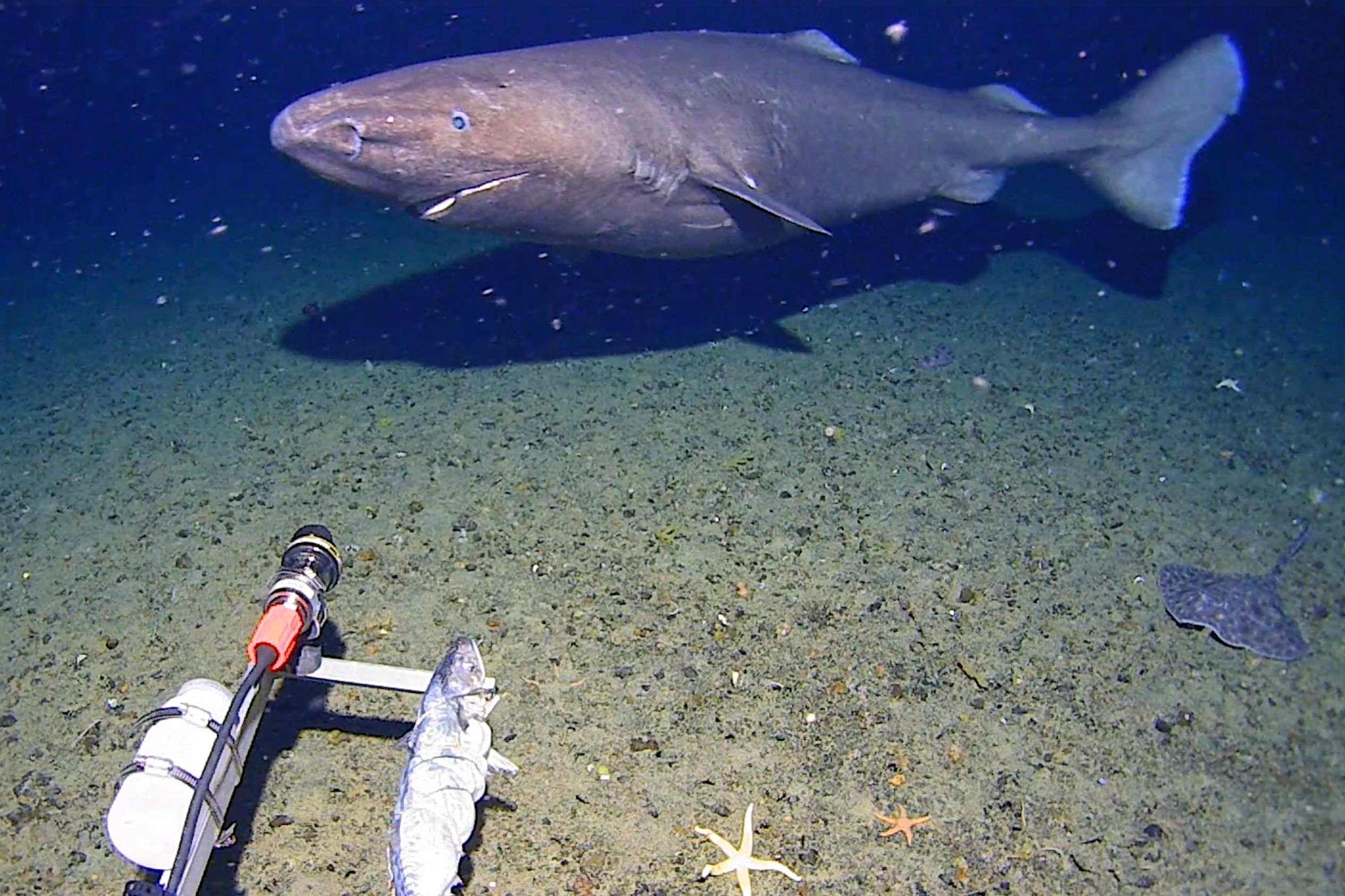
The icy realm of Antarctica, long thought inhospitable to sharks, has just thrown us a major curveball. Scientists have, for the first time ever, captured video evidence of a shark swimming in the Antarctic Ocean! This is huge news, and it's forcing us to rethink what we thought we knew about life in the planet's southernmost waters.
SHARK DISCOVERY IN ANTARCTICA?! What This Means Wi...
The groundbreaking discovery came from researchers led by Alan Jamieson, the head honcho at the Deep-Sea Research Centre at the University of Western Australia. The shark, a hefty specimen estimated at 3 to 4 meters long, was filmed back in January 2025. Think about that – for years, the general assumption was “no sharks down there.” Turns out, we were wrong.
"We went down there not expecting to see sharks because there’s a general rule of thumb that you don’t get sharks in Antarctica," Jamieson told the AP. "And it’s not even a little one either. It’s a hunk of a shark. These things are tanks." I mean, can you imagine the surprise when they reviewed the footage? It's enough to make you double-check your gear before your next dive, that's for sure.
The Australian research team's camera, strategically placed near the South Shetland Islands off the Antarctic Peninsula, snagged the footage at a depth of 490 meters. That's a chilly neighborhood, with temperatures barely nudging above 1 degree Celsius. Turns out, this shark was likely seeking out the warmest layer of water at that depth – talk about adaptability!
Jamieson is quick to point out that there's no prior record of any shark actually *living* in the Antarctic Ocean. Peter Kyne, a conservation biologist from Charles Darwin University, agrees, adding that the lack of data on shark populations in the region is mostly due to its sheer remoteness. It’s not exactly a weekend getaway spot, is it?
Now, the obvious question is: why now? Could climate change be nudging these creatures further south? While that’s a possibility, Kyne suggests that slow-moving sleeper sharks may have always been down there, simply hiding in plain sight. Or, rather, in the perpetually dark depths. Jamieson believes the population may be small, making them incredibly hard to find.
The Antarctic Ocean has this fascinating layered structure, with colder, denser water refusing to mix with the fresher stuff up top. This creates distinct zones down to about 1,000 meters. Jamieson suspects that other sharks might be lurking at these depths, feasting on whale carcasses, giant squid, and whatever else sinks to the bottom. Pretty grim, but that's nature for you.
The problem is, research cameras at these depths are rare, and only operate during the summer. "The other 75 per cent of the year, no one’s looking at all. And so this is why, I think, we occasionally come across these surprises," Jamieson explained. This discovery is a reminder that there's still so much we don't know about our planet, especially the deep, dark corners of it. It just goes to show that nature will always have the ability to surprise us.
Comments
Please sign in with Google to post a comment
No comments yet. Be the first to comment!