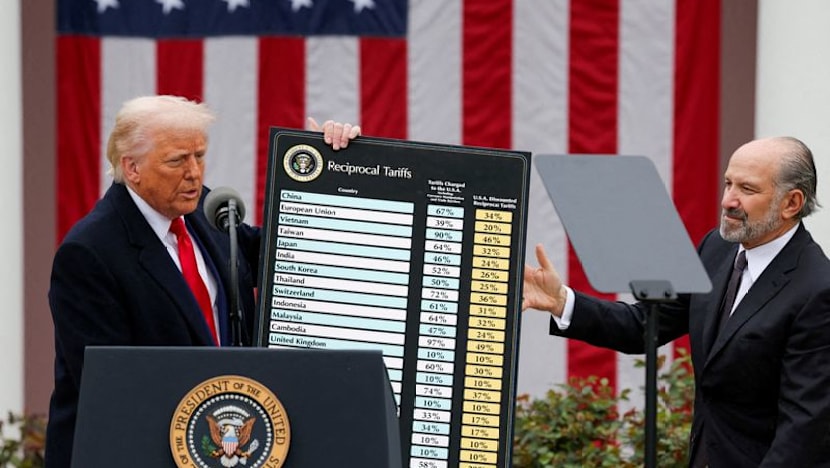
WASHINGTON - In a landmark decision that has sent shockwaves through the global economy, the Supreme Court on Friday struck down President Donald Trump's sweeping tariffs. These tariffs, implemented under the guise of national emergency powers, have been a cornerstone of Trump's trade policy since his return to office, and this ruling represents a significant blow to his administration's authority.
Supreme Court SHOCKS with Tariff Ruling! What Happ...
The 6-3 decision, authored by Chief Justice John Roberts, affirmed a lower court's judgment that President Trump's use of the 1977 International Emergency Economic Powers Act (IEEPA) exceeded the powers granted to the executive branch. The court's majority found that the administration's interpretation of the IEEPA, which allowed the president to unilaterally impose tariffs, encroached upon the constitutional powers reserved for Congress.
Central to the court's reasoning was the "major questions" doctrine. This principle, often favored by conservative justices, stipulates that executive branch actions with "vast economic and political significance" require explicit authorization from Congress. Roberts, citing a prior Supreme Court ruling, wrote that the president must "point to clear congressional authorization" to justify the imposition of tariffs. "He cannot," Roberts emphasized, effectively shutting down Trump's argument that the IEEPA granted him such broad authority. It's a fascinating application of the doctrine, especially considering how it's been used recently to push back against executive overreach from both sides of the political spectrum.
Trump's reliance on tariffs has been a defining feature of his economic and foreign policy, sparking a global trade war that strained relationships with key trading partners and injecting considerable uncertainty into financial markets. Since his second term began, the constant threat and implementation of these tariffs have kept businesses on edge, and now they finally have some reprieve.
The legal challenge that led to this Supreme Court decision was brought by businesses directly affected by the tariffs, as well as twelve US states, largely Democratic-governed. These plaintiffs argued that Trump's unprecedented use of the IEEPA to unilaterally impose import taxes was unconstitutional. Justices Clarence Thomas, Samuel Alito, and Brett Kavanaugh dissented from the majority opinion. Roberts was joined by conservative Justices Neil Gorsuch and Amy Coney Barrett, both Trump appointees from his first term, along with the court's three liberal justices, showcasing an interesting split on the bench.
While the Supreme Court, with its current 6-3 conservative majority, had previously sided with Trump in a series of emergency decisions following his return to the presidency in January 2025, this ruling marks a notable departure. The Trump administration had projected that these tariffs would generate trillions of dollars in revenue for the United States over the next decade. The long-term economic consequences of this decision remain to be seen, but it's clear that this ruling has significantly altered the landscape of US trade policy and the balance of power between the executive and legislative branches. The Trump administration has not yet issued a formal response, but you can bet they're strategizing right now.
Comments
Please sign in with Google to post a comment
No comments yet. Be the first to comment!