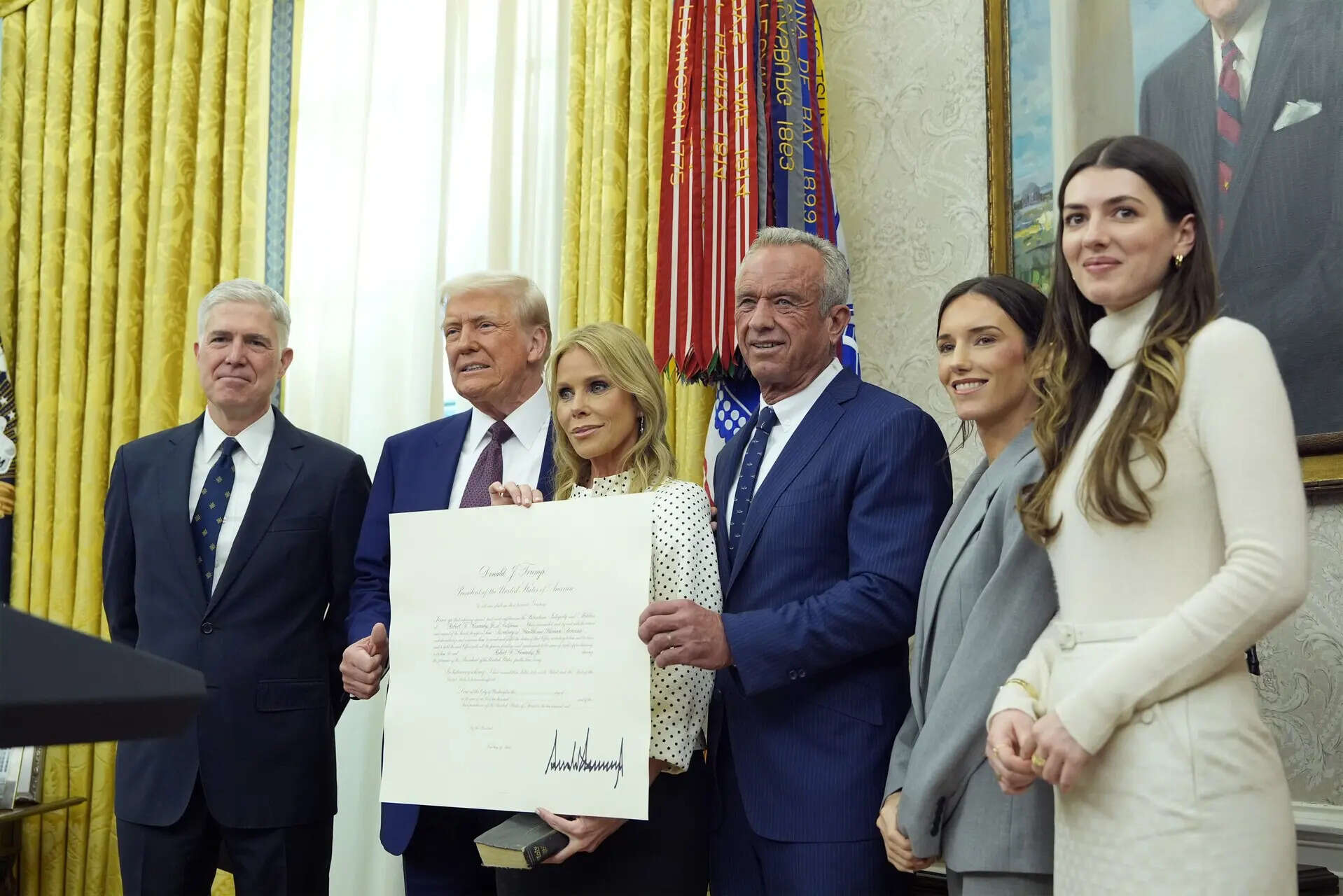
Tariff Ruling: Trump Appointees on Supreme Court Defy Him
Trump's Supreme Court SHOCK: He Appointed Them, Bu...
In a landmark decision that has redefined the boundaries of presidential authority in the United States, the Supreme Court on February 20, 2026, invalidated Donald Trump's sweeping global tariffs by a vote of 6-3. The verdict is historic not only for overturning one of Trump's most assertive economic policies but also because two justices he personally appointed sided with the majority against him. The case has swiftly become a pivotal moment in the ongoing constitutional debate regarding the extent to which a U.S. president can exercise economic power without Congressional approval.
The core issue of the case was whether Trump could invoke emergency powers under a national security law to impose broad tariffs on imports. The Supreme Court ruled that the law did not authorize such extensive action, asserting that tariffs are essentially a form of taxation, a power constitutionally vested in Congress. This is a big deal. It potentially limits how any future president can use national security as a justification for sweeping economic changes.
Chief Justice John Roberts, writing for the majority, framed the case as a fundamental question of separation of powers. He cautioned that allowing a president to impose tariffs without explicit legislative approval would effectively grant the executive branch unchecked authority to reshape the economy. Roberts is known for trying to maintain the court's image as apolitical, and this decision certainly seems to fit that pattern.
In a striking institutional rebuke, two of Trump's own nominees, Neil Gorsuch and Amy Coney Barrett, joined the majority. This is where things get really interesting. It's one thing to disagree on social issues, but to directly challenge the economic policies of the president who appointed you? That's a statement.
Gorsuch, appointed in 2017, has consistently advocated for strict constitutional limits on executive power. In this instance, he emphasized that significant economic actions require explicit congressional authorization and cannot be based on ambiguous statutory language. His opinion reflected a consistent judicial philosophy that prioritizes constitutional structure over political alignment. He's always been a textualist, so this is pretty much in line with what we'd expect.
Barrett, appointed later in Trump's term, surprised many. While considered a conservative, her vote suggests a commitment to the rule of law that transcends partisan allegiance. Her written opinion, released separately, underscored the importance of Congressional oversight in matters of economic policy. She argued that allowing the president to unilaterally impose tariffs would fundamentally alter the balance of power, setting a dangerous precedent for future administrations, regardless of political affiliation.
The dissenting justices, predictably, argued that the national security law in question granted the president broad authority to act in defense of the country's economic interests. They warned that the majority's decision could hamstring future presidents in responding to economic threats. The long term implications of this are still unknown, but it seems like the court has sent a clear message regarding presidential power, and it wasn't the one Trump wanted to hear.
Comments
Please sign in with Google to post a comment
No comments yet. Be the first to comment!