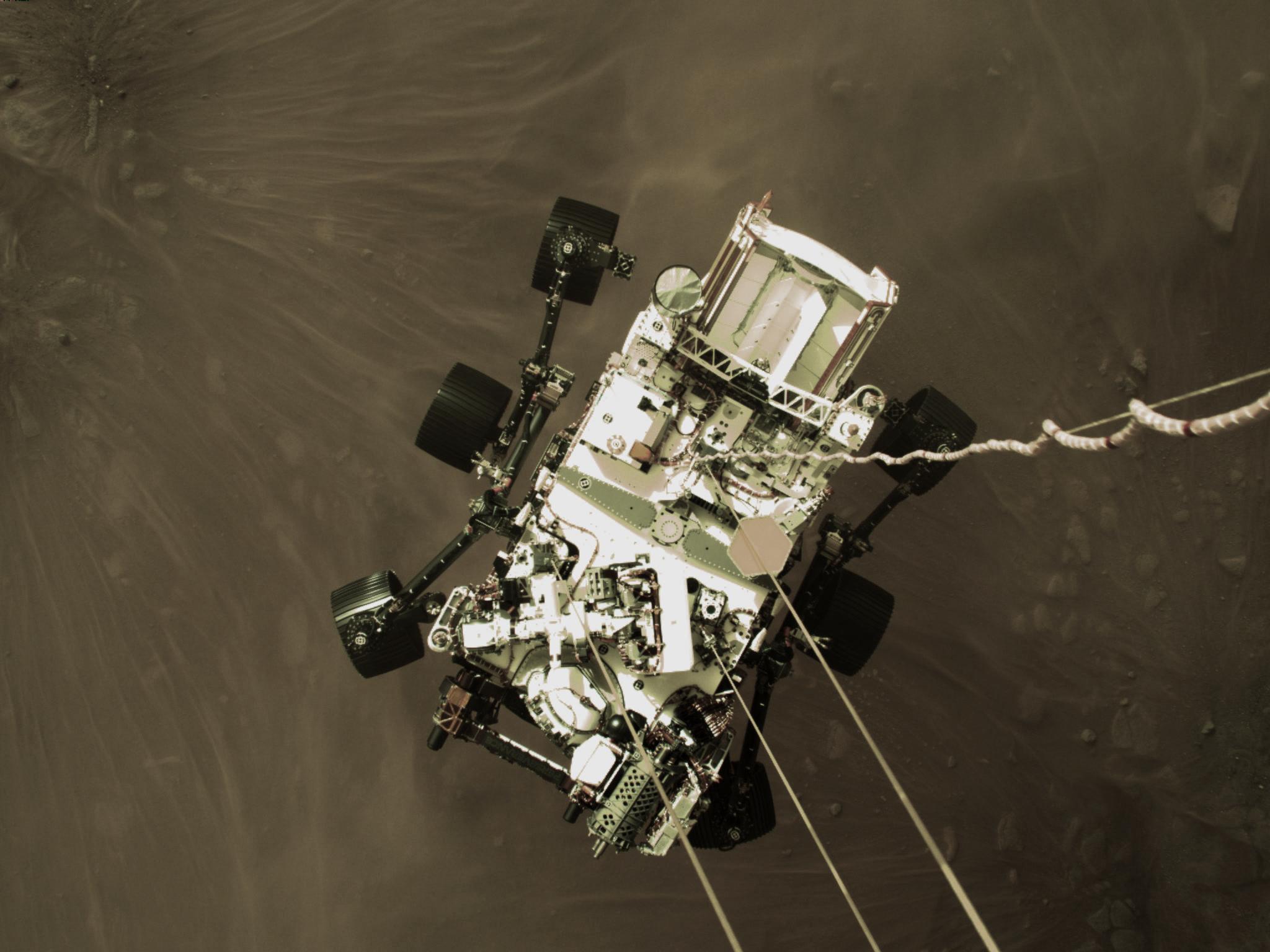
It's hard to believe it's been a few years already, but NASA's Perseverance rover is still diligently exploring Mars, and the latest news is pretty exciting. Remember that stunning top-down shot we all saw back on February 18, 2020, as it descended? Well, it wasn’t just for show; Perseverance has been hard at work ever since, and it's making some serious progress in our understanding of the Red Planet.
Mars Landing Stunner! What Perseverance Just Found...
The primary mission, as you probably know, is to search for any evidence of ancient microbial life. NASA’s focus is really on figuring out if Mars was ever habitable in the past. And that's where Jezero Crater comes in. Scientists had identified it as a prime landing spot because of the strong belief that it was once a lake, complete with an ancient river delta feeding into it. Think of the potential for preserved organic material!
And guess what? It seems like that bet is paying off. Just this past summer, in 2024, Perseverance collected a sample from a rock formation dubbed "Chevaya Falls." The initial analysis shows potential biosignatures. Now, I need to emphasize "potential." This doesn't mean we've found Martians just yet. It means there are indicators that *could* point to past life. It's going to require a lot more data and research back on Earth to confirm anything definitive, but this is a HUGE step. It's exactly the kind of thing scientists were hoping to find, and it’s a thrilling prospect.
Beyond the pure science, Perseverance is also a testament to incredible technological innovation. One thing that really impressed me is the new autonomous navigation system. It's a mouthful, but the "Mars Global Localization" technology developed at JPL allows the rover to pinpoint its location completely independently. Basically, it uses an algorithm to match up panoramic images from its cameras with orbital maps. No constant hand-holding from mission control is needed! This significantly speeds up the rover's progress and allows it to explore more efficiently, which is crucial for covering as much ground as possible in its mission timeline. It’s pretty cool to think about – a robot navigating an alien world, largely on its own.
All this, of course, goes back to NASA’s core mission: pushing the boundaries of what's known in air and space, spurring innovation that benefits us all, and hopefully, inspiring future generations through these amazing discoveries. And honestly, watching Perseverance send back its findings, it's hard not to feel a sense of wonder and excitement about what else is out there. (Image credit: NASA/JPL-Caltech)
Comments
Please sign in with Google to post a comment
No comments yet. Be the first to comment!