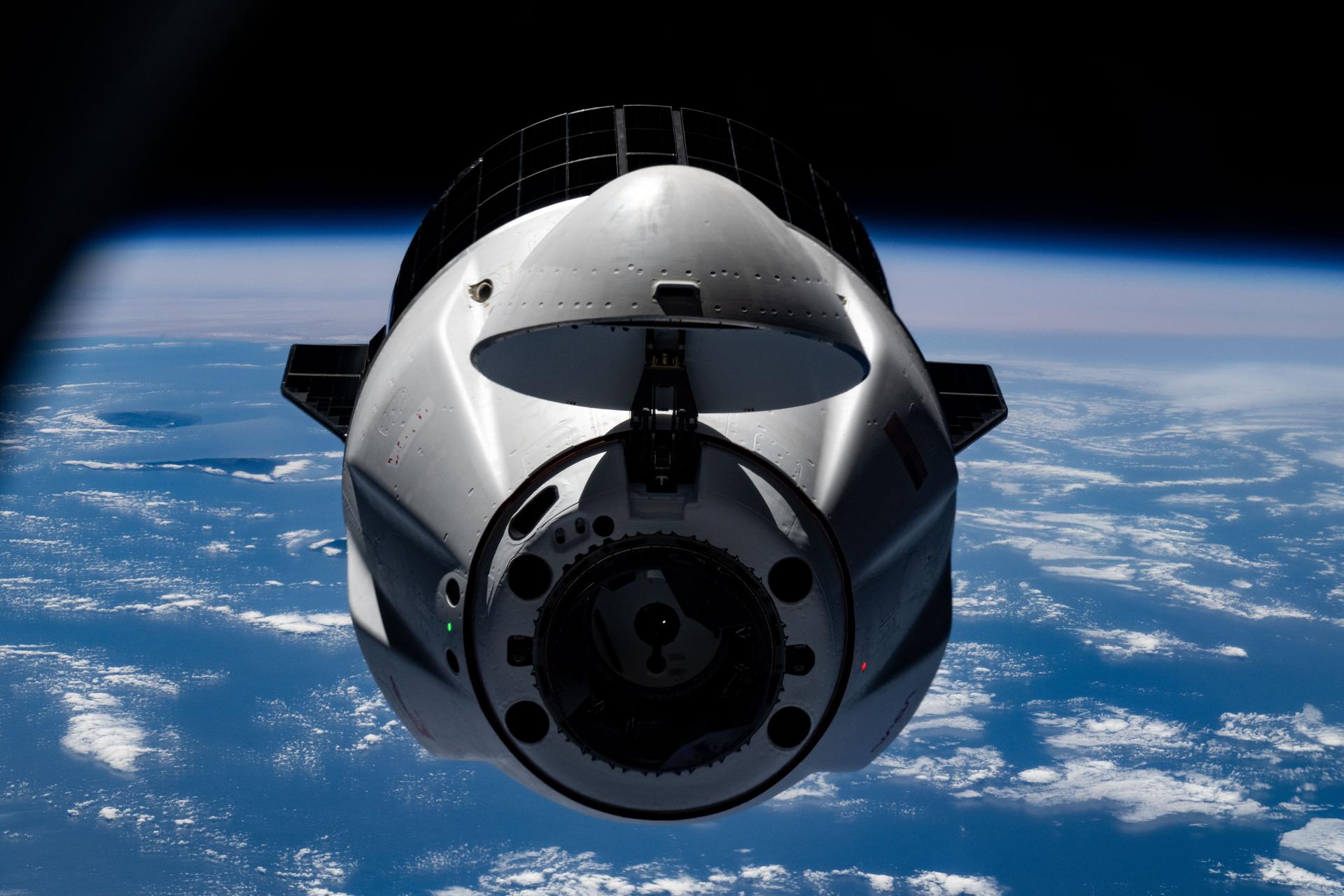
Space fans, mark your calendars! NASA is gearing up for the departure of SpaceX's 33rd Commercial Resupply Services mission from the International Space Station (ISS) this Thursday, February 26th. Get ready for some live coverage, because this Dragon is bringing home some serious science.
Space Station's Shocking Exit! What Happens Next W...
Live coverage of the undocking and departure kicks off at 11:45 a.m. EST. You can catch it all on NASA+, Amazon Prime, and NASA’s YouTube channel. I’ll definitely be tuning in; there's something inherently cool about watching these events unfold in real time, knowing the sheer engineering marvel involved.
The Dragon spacecraft is scheduled to autonomously undock from the Harmony module’s forward port at 12:05 p.m. EST, and then fire its thrusters to start its journey away from the ISS. Splashdown is expected later that evening, around 11:44 p.m. PST, off the coast of California. Sadly, NASA won't be streaming the splashdown, but keep an eye on their space station blog for updates. I'm picturing the recovery teams already prepping for a busy night at sea.
But here's the really exciting part: the returning cargo! We're talking about a treasure trove of scientific investigations that could have huge implications for future space exploration and even life here on Earth. One of the highlights is the Euro Material Ageing study, which put 141 different materials through the wringer in space for a year. Scientists are analyzing the effects of the space environment on coatings, insulation, and even 3D-printed materials. The results could lead to more durable spacecraft and even better displays and optical devices.
Thailand’s Liquid Crystals experiment is also making its way back. This one focuses on how films used in electronics behave in microgravity, which could improve electronics both in space and back home. Then there are the frozen samples from the Stellar Stem Cells Mission 2, which are going to be used to study how microgravity affects brain and heart stem cell growth. This could potentially lead to new treatments for neurodegenerative diseases like ALS and Parkinson’s – a truly groundbreaking possibility.
And let's not forget the SpaceDuino project, which successfully measured vibrations using readily available hardware, proving that space-based instrumentation doesn't have to break the bank. The Moon Microscope also passed with flying colors, testing a portable blood analysis kit – a critical piece of technology for future lunar or Martian missions. It's innovations like these that really excite me; they demonstrate how we can push the boundaries of space exploration without necessarily needing a multi-billion dollar budget for every experiment.
Oh, and one more cool thing: the Dragon spacecraft also demonstrated its ability to reboost the space station, helping to maintain its altitude. It performed six reboosts in total, before departure preparations began. Arriving at the station on August 25, 2025, with over 5,000 pounds of science, supplies, and hardware, this Dragon mission has been a fantastic example of the ongoing collaboration and innovation happening aboard the ISS, a testament to over a quarter-century of continuous human habitation and scientific advancement in orbit.
Comments
Please sign in with Google to post a comment
No comments yet. Be the first to comment!