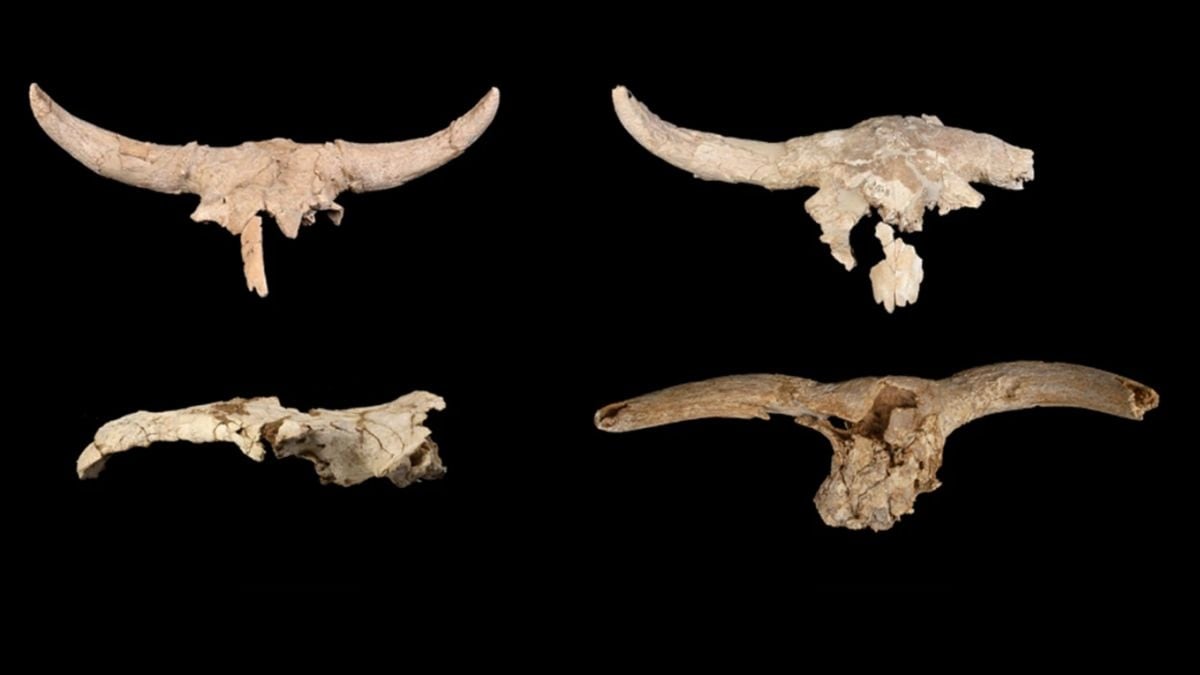
Neanderthals, it seems, had a penchant for collecting skulls. A recent study detailing discoveries in Spain's Des-Cubierta Cave is sending ripples through the scientific community, revealing that our ancient hominid cousins repeatedly deposited horned animal skulls in this cave over thousands of years. And the big question, of course, is: why?
Cave of Skulls: 35 Found! What Scientists Just Dis...
This isn't a case of a single, isolated incident. The research, published this week, points to a deliberate, long-term practice. The skulls weren't tossed in all at once; instead, Neanderthals transported and arranged them intermittently throughout the late Middle Paleolithic period, roughly 70,000 to 50,000 years ago. Think about that for a second. Generations of Neanderthals, returning to this cave with skulls. It really makes you wonder what was going through their minds.
Excavations, which began back in 2009, initially uncovered a substantial collection of Mousterian stone tools. This type of tool is primarily linked to Neanderthals in Europe, so their presence wasn't a surprise. However, alongside these tools, archaeologists stumbled upon something far more peculiar: an unusual accumulation of animal remains, predominantly skulls. We're talking about the upper portions of at least 35 different animal skulls, carefully cataloged by researchers. The breakdown includes 28 bovines (think ancient cattle), five deer, and two rhinoceroses. What's even stranger? The rest of the skeletons were largely missing – no jawbones, no limbs, not even cheekbones in many cases. Just the skulls.
The deliberate accumulation of animal skulls is, to put it mildly, pretty rare in the archaeological record. It's not like finding a typical hunting site where animals were butchered for food. A team, led by archaeologist Lucía Villaescusa from the University of Alcalá in Spain, embarked on a detailed investigation to understand how these skulls ended up in the cave. They looked at everything: the spatial distribution of geological debris and archaeological finds, carefully piecing together fragmented bones, and assessing how well the bones had been preserved over millennia. It's painstaking work, but absolutely crucial to understanding what happened.
What they found was fascinating. It seems that a rockfall had initially filled the gallery with a cone-shaped pile of rubble. Only after this event did the Neanderthals start bringing in the animal skulls, placing them there during different phases of activity. The exact timeline is still a little fuzzy, but the distinct separation between sediment layers strongly suggests that this wasn't just a one-time event. So, the mystery remains. Were these skulls part of some ritual? A display of hunting prowess? Or something else entirely? Whatever the reason, this discovery offers another intriguing glimpse into the complex lives and minds of our Neanderthal ancestors. And, frankly, it leaves me wanting to know even more.
Comments
Please sign in with Google to post a comment
No comments yet. Be the first to comment!