Six planets in one sky: rare planetary alignment visible from Spain – when and how to watch
RARE Cosmic Show! See Six Planets Align Over Spain...
If you enjoy stepping outside on a quiet evening and staring at the sky for a few minutes, the end of February brings a lovely little surprise, courtesy of our solar system.
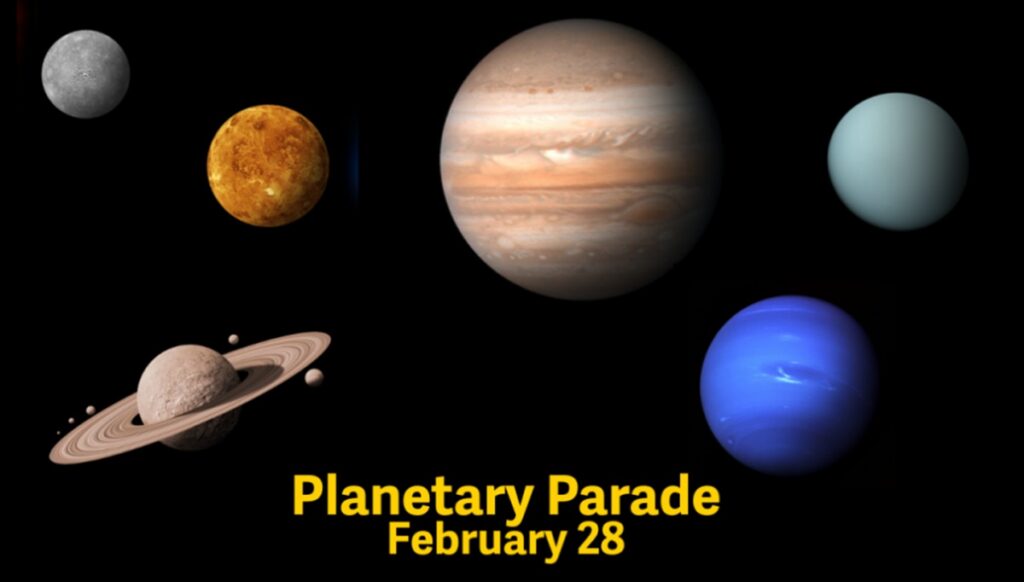
A rare planetary gathering involving Mercury, Venus, Jupiter, Saturn, Uranus, and Neptune will be visible from Spain around February 28th, offering one of those simple but memorable moments that make stargazing feel special. It’s the kind of thing that makes you appreciate the vastness of it all, you know?
While the planets won’t form a perfect straight line – let's be realistic, nature rarely offers perfect geometry – they will appear grouped along the same part of the sky from Earth. Think of it as a celestial family photo, and definitely worth catching if the weather cooperates.
The good news is that you don't need a fancy telescope to enjoy most of this celestial event. Venus will be the easiest to spot, glowing brightly just after sunset, often visible even before the sky is fully dark. Jupiter should also stand out without too much effort, thanks to its considerable brightness. Saturn, identifiable by its steady, slightly golden light, will also be visible.
Mercury, however, presents more of a challenge. It sits low near the horizon and doesn’t linger for long, so catching it depends on timing and an unobstructed view of the skyline. Think open fields, higher ground, anything to get a better peek. Uranus is faint enough that binoculars will help you pick it out with confidence, even though under very dark skies, it can sometimes be seen with the naked eye. Neptune, meanwhile, is realistically a binocular or telescope target. Its light is simply too subtle to stand out without a bit of optical assistance.
This isn’t a blink-and-you-miss-it event either. Over the first few days of March, the same grouping should remain visible, although shifting positions and, of course, weather conditions will influence how easy it is to spot each planet. Keep an eye on the forecast!
As always with stargazing, location is key. A balcony in the middle of a brightly lit city might still reveal Venus and Jupiter, but heading somewhere darker – even a quiet park on the outskirts of town, or a beachfront away from city lights – can make a surprising difference. Even just a little less light pollution helps immensely.
Ultimately, you don’t need to identify every single planet for the experience to be worthwhile. Spotting Venus shining brightly and knowing that Jupiter, Saturn, and the others are nearby already adds a sense of scale and wonder that’s hard to ignore. It's a reminder that there's a whole universe going on above us.
So, if the skies stay clear, take a moment over the coming evenings – or during those calm early-morning hours – to look up. Sometimes the best astronomical events aren’t the rarest ones, but the ones that quietly remind you how much is happening above your head without you even noticing. And who knows, maybe you'll inspire a new generation of stargazers!
Comments
Please sign in with Google to post a comment
No comments yet. Be the first to comment!