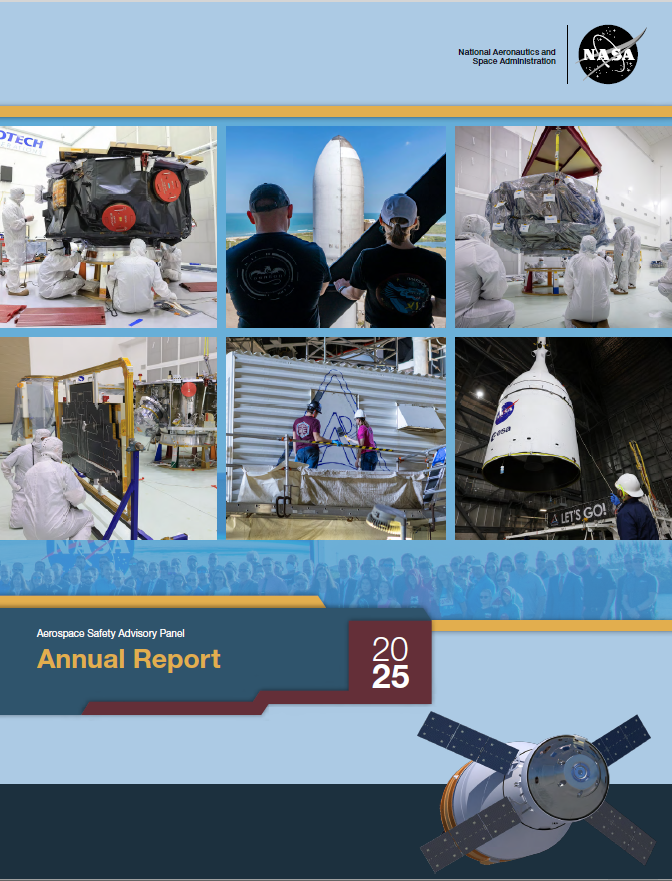
Houston, we have a... report. NASA's Aerospace Safety Advisory Panel (ASAP), the group that keeps a watchful eye on all things safety for the space agency, has just dropped its 2025 annual assessment. And while they acknowledge some progress, it's clear there are still some serious headwinds facing NASA.
NASA Safety Report: Critical Warnings Ignored?! Wh...
The report, which is essentially a report card for NASA's safety performance, identifies some pretty significant challenges. It's not all sunshine and rainbows, folks. The panel points to a tangled web of issues: workforce shortages, bureaucratic acquisition processes, unclear lines of technical authority, tight budget constraints, and the ever-increasing complexity of human spaceflight itself. Sounds like a recipe for potential problems, right?
Now, NASA Administrator Jared Isaacman seems to be taking the report seriously. "Independent assessments like this will make NASA better," he stated. He acknowledges the need to "raise the bar" in areas like oversight, risk management, and learning from mistakes. That last part is key – nobody wants to repeat errors in space, where the stakes are, well, astronomically high.
This year's deep dive covered a lot of ground. Everything from the strategic vision for the agency to the ambitious Moon to Mars program got a thorough examination. The future of U.S. involvement in low Earth orbit, astronaut health risks (always a concern when you're outside the Earth's protective bubble), and even the X-59 supersonic jet project were all under the microscope.
The panel did highlight some wins. They noted progress in getting ready for Artemis II, better oversight of the Moon to Mars program, safe operations aboard the International Space Station, and some important advances in astronaut health research. Plus, they gave a nod to the successful first flight of the X-59. But, and this is a big but, they also flagged some serious concerns.
These concerns include the high-risk nature of the Artemis III mission, the lessons learned (often the hard way, it seems) from Boeing's Starliner test flight, the complex task of planning the deorbit of the aging Space Station, and some overarching systemic issues that need addressing. Artemis III, in particular, sounds like it’s giving them some sleepless nights. I have to admit, with the ambitious goals of that mission, it's understandable.
To tackle these problems, the panel has some specific recommendations. First, NASA needs to get its act together when it comes to how it buys things for human spaceflight programs. Second, they need to take a hard look at Artemis III and future missions to make sure the risks are more manageable. And third, they need to be more transparent about mishaps and "close calls," learning from them instead of sweeping them under the rug.
Isaacman seems to be on board with the recommendations. He mentioned "recalibrating" acquisition strategies, strengthening core competencies by hiring more civil servants, and increasing the pace of launches. He also emphasized transparency, pointing to the Starliner investigation as an example of owning up to mistakes. So, it sounds like NASA is listening. Let's hope they act decisively and quickly to address these concerns. The safety of our astronauts, and the future of space exploration, depends on it.
Comments
Please sign in with Google to post a comment
No comments yet. Be the first to comment!