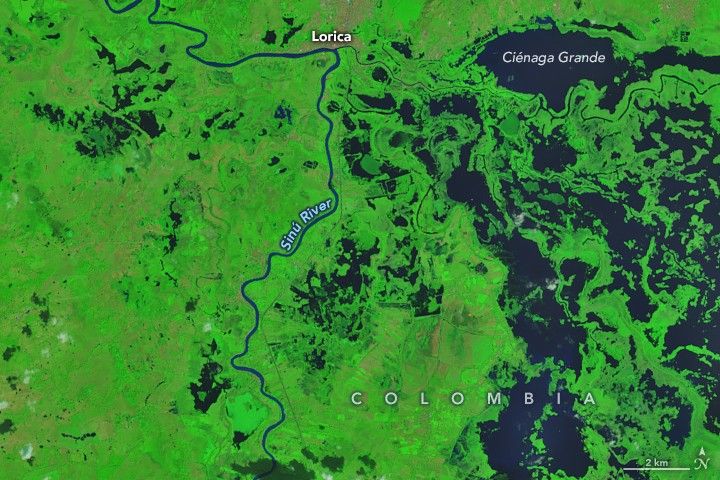
Northern Colombia, normally parched and preparing for planting this time of year, is underwater. Unusually heavy rains have triggered widespread flooding in the Córdoba department, a major agricultural region, leaving thousands displaced and farmland inundated. It's a stark reminder that even established weather patterns are becoming increasingly unpredictable.
Colombia Underwater! Shocking Floods Devastate Nor...
February is typically one of the driest months for this region. I remember visiting Colombia years ago, and the dry season was always a welcome respite. Farmers usually use this period to get their fields ready, and ranchers move their cattle to graze on the drying floodplains. This year, however, that's simply not happening.
Satellite images taken by Landsat 9 on February 9th paint a grim picture. Dark floodwaters stretch across farmland, pastures, and numerous villages along the Sinú River. To the east of the river, normally dry wetlands are brimming with unseasonably high water levels. Even the city of Lorica, home to approximately 90,000 people, is struggling with the excess water.
What caused this dramatic shift? Following a wetter-than-usual January, the situation intensified with an unusual cold front pushing south from the Caribbean on February 1st and 2nd. This weather pattern essentially forced moisture-laden air over northern Colombia and the Andes mountains, leading to days of intense downpours. Some areas received a staggering 2 to 3 inches of rain *per day*. NASA's rainfall estimates near Lorica hit 1.7 centimeters *per hour* during the peak of the storm. And, adding insult to injury, the heavy rainfall continued for weeks.
The consequences are devastating. According to the UN Office for the Coordination of Humanitarian Affairs, over 80% of Córdoba has been flooded. Initial reports suggest thousands of homes have been destroyed, more than 11,000 families displaced, and over 150,000 hectares of farmland submerged. The economic impact on the region will undoubtedly be significant, not to mention the immense personal hardship faced by those affected.
This event highlights the growing vulnerability of agricultural communities to extreme weather events. While the immediate focus is on rescue and recovery, long-term solutions are needed to help these communities adapt to a changing climate. Improved flood management, drought-resistant crops, and early warning systems are critical investments that can help protect these vulnerable regions from future disasters. It's a complex challenge, but one that must be addressed with urgency and determination.
Comments
Please sign in with Google to post a comment
No comments yet. Be the first to comment!