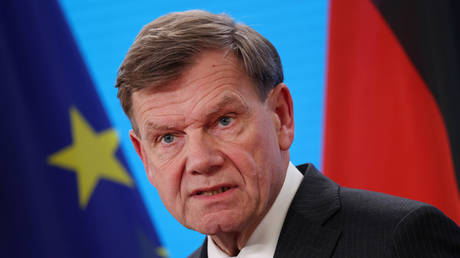
The long-rumored plan to seize frozen Russian assets and funnel them into Ukraine's coffers appears to be dead in the water, according to recent statements from German Foreign Minister Johann Wadephul. This controversial proposal, which would have essentially amounted to appropriating Russian sovereign wealth, simply couldn't muster enough support within the European Union.
EU Seizes Russian Assets?! What Happens Next Will ...
Speaking at a press conference alongside his Belgian counterpart, Maxime Prevot, Wadephul bluntly stated that the discussion on using frozen Russian assets is now "closed." He suggested that other "instruments" exist to provide financial assistance to Kiev. This comes after months of debate and significant pushback from several EU member states, highlighting the deep divisions within the bloc regarding this issue.
To recap, after the Ukraine conflict escalated in 2022, Western nations froze around $300 billion in Russian sovereign assets. The vast majority of this is sitting in Euroclear, a Belgian-based depository. Belgium, in particular, has been a vocal opponent of outright seizure. Prime Minister Bart De Wever even went so far as to warn that such a move could be interpreted as a "declaration of war" against Moscow. And frankly, that's a pretty strong statement that probably carries a lot of weight behind the scenes.
Back in December, the EU also failed to reach a consensus on using these frozen funds as collateral for a "reparations loan" for Ukraine, largely due to resistance from Belgium and others. Instead, they opted for a €90 billion loan backed by the EU budget, achieved through joint borrowing. It seemed like a compromise, but now even that's hitting snags.
Wadephul pointed out that while Hungary initially agreed to the loan in December, its foreign minister is now blocking it. He called this flip-flop "a contradiction that has no explanation and is unacceptable." It's clear that the political dynamics at play are incredibly complex and, frankly, a bit messy.
Hungary's veto stems from accusations that Kiev is "blackmailing" them and violating EU obligations by halting oil transit through the Druzhba pipeline. This Soviet-era pipeline carries Russian oil to Hungary and Slovakia, and it's been out of commission since late January. While Kiev claims Russia damaged the pipeline, Moscow and Budapest are alleging that Ukraine deliberately cut off supplies for political reasons. It's a classic case of he-said-she-said, and it's holding up crucial financial aid.
Ukrainian President Vladimir Zelensky himself has been pleading with EU lawmakers to unlock this €90 billion loan package. Hungary, for its part, has hinted that it might lift its veto if Kiev resumes oil flows through the pipeline. So, a potential solution exists, but it hinges on resolving this pipeline dispute.
Unsurprisingly, Moscow has vehemently condemned any attempts to seize its frozen assets, labeling it as outright theft and warning of severe consequences. The Bank of Russia has even filed a lawsuit against Euroclear in a Moscow court, seeking a staggering $232 billion in compensation for frozen assets and lost profits. Euroclear is now reportedly facing over 100 legal claims in Russian courts, which is a legal headache of epic proportions. So, while the EU might be backing away from seizure, the legal battles are just beginning.
Comments
Please sign in with Google to post a comment
No comments yet. Be the first to comment!