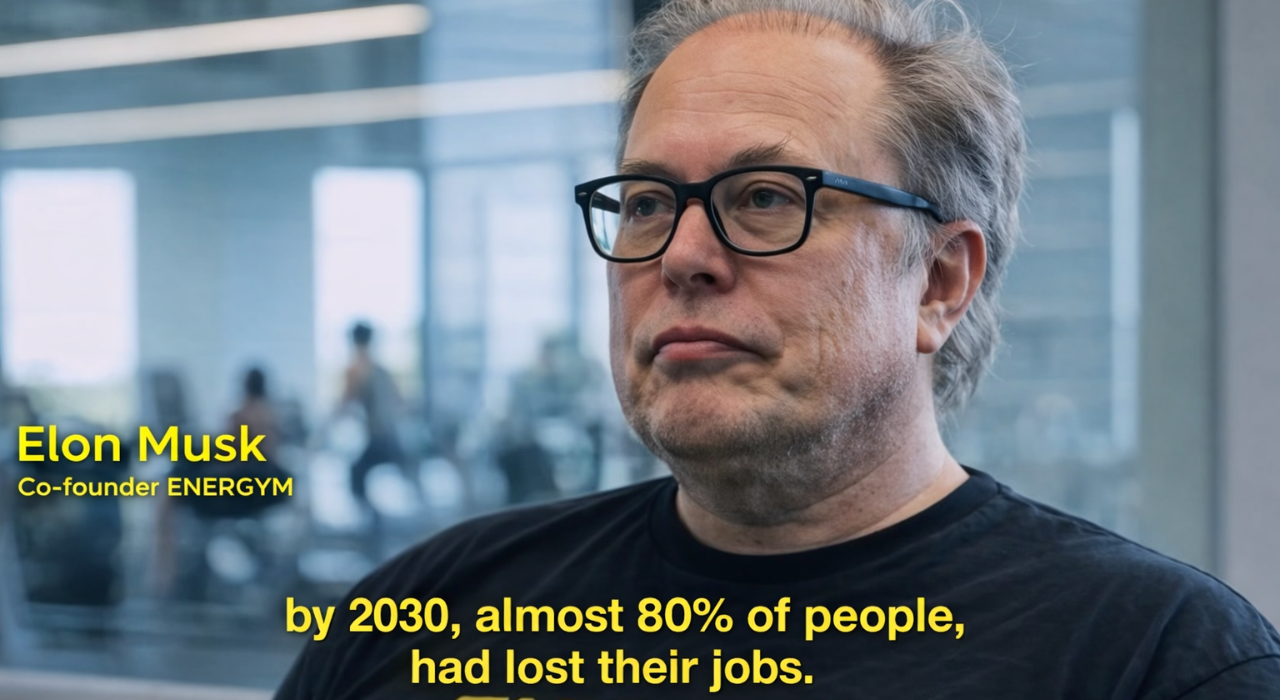
Are we about to become batteries for AI? That's not a headline I ever thought I'd be writing, but a recent thought experiment making the rounds online is prompting some serious reflection on the future of work, energy, and frankly, human worth. It paints a rather dystopian, albeit perhaps plausible, picture of 2030, where AI has essentially eaten 80% of our jobs.
AI Using *Us* for Power?! Shocking 2030 Prediction...
The core idea revolves around a shift in how we perceive our bodies and their capabilities. For centuries, physical labor was the backbone of society. You could tell a lot about a person's life and livelihood simply by observing their physique. Strong hands, a sturdy back - these were badges of honor, indicators of a life spent contributing tangible value to the world. But in our increasingly automated world, that connection has become... optional, to say the least.
Think about it: the most sculpted bodies in our cities are often the result of deliberate, almost ritualistic exercise. We pump iron in air-conditioned gyms, meticulously track our macros, and chase optimization metrics with a fervor that borders on religious. "Putting in the work" now often means sculpting ourselves in a way that bears no relation to our actual professional lives. It’s effort turned aesthetic, the body as the ultimate project.
But what happens when even *that* project becomes irrelevant to economic survival? This is where the thought experiment gets truly unsettling. In a world where AI handles the vast majority of tasks, the body, stripped of its traditional role in production, might become the *last* remaining asset. The video posits a future where we literally generate electricity through exercise, turning gyms into power plants, fueling the very AI systems that rendered our previous skills obsolete. Imagine treadmills connected to the grid, our sweat and strain powering the digital overlords. It's a bleak vision, one that reduces human effort to a mere commodity, a biological battery.
Now, I'm not saying this *will* happen. It's a thought experiment, after all. But it's a powerful one because it forces us to confront some uncomfortable questions about the future of work and the inherent value of human beings in an increasingly automated world. What happens when our skills are no longer needed? What gives our lives meaning when work no longer anchors our daily existence? These are questions we need to be asking now, before we find ourselves plugged into the wall, powering the AI that took our jobs.
Comments
Please sign in with Google to post a comment
No comments yet. Be the first to comment!