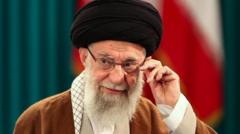
Ayatollah Khamenei, Iran's Supreme Leader and a figure synonymous with the nation's hardline policies for over three decades, is reportedly dead. The announcement, made by US President Donald Trump, claims Khamenei was killed in a joint US and Israeli airstrike. As of this writing, Iranian authorities have yet to officially confirm the death of the 86-year-old leader. However, if true, this marks a seismic shift in Iranian politics and throws the future of the country, and perhaps the entire region, into considerable uncertainty.
Khamenei's Iron Grip: Is Iran on the Brink?!
Khamenei's power was absolute. As Supreme Leader, he wasn't just a figurehead; he was the ultimate authority. He held sway over all branches of government, commanded the armed forces, including the powerful Revolutionary Guards, and possessed the final say on matters of public policy. He even handpicked candidates for key political positions. His influence permeated every aspect of Iranian society, a reality that has been the only one experienced by an entire generation of young Iranians.
Growing up in Mashhad, a city in northeastern Iran, Khamenei's early life was steeped in religious tradition. The son of a Shia cleric, he received a rigorous religious education, focusing on the Quran and eventually qualifying as a cleric himself. He often spoke of his humble beginnings, recalling a childhood marked by poverty. This resonated with many Iranians, particularly those who also felt marginalized under the Shah's rule.
Like many religious figures of his generation, Khamenei's path led him into the political arena. He became a vocal critic of the Shah, joining the burgeoning opposition movement that eventually led to the 1979 Islamic Revolution. His activism came at a price; he was arrested multiple times, enduring imprisonment, torture, and internal exile. These experiences solidified his revolutionary credentials and cemented his place within the emerging leadership.
Following the revolution, Ayatollah Ruhollah Khomeini, the Supreme Leader, appointed Khamenei as the Friday prayer leader of Tehran. His sermons, broadcast nationwide, provided him with a powerful platform to shape public opinion and further solidify his position. He became a key voice in the new regime, articulating its ideology and justifying its actions.
Think back to the hostage crisis at the US embassy in Tehran. Khamenei and other revolutionary leaders staunchly supported the students who seized the embassy, protesting America's decision to harbor the deposed Shah. This event, a defining moment in modern Iranian history, severely damaged relations with the Carter administration and set Iran on a course of anti-Americanism that has persisted for decades, leading to international isolation. It's a complex legacy, to say the least.
Just months after the hostage crisis, in June 1981, Khamenei narrowly escaped an assassination attempt. A bomb hidden in a tape recorder exploded during one of his lectures, leaving him severely injured. He suffered lung damage and lost the use of his right arm – a visible reminder of the dangers he faced and the sacrifices he made in the name of the revolution. Later that year, he ascended to the presidency... but that's a story for another time, as we wait for confirmation on this truly momentous news.
Comments
Please sign in with Google to post a comment
No comments yet. Be the first to comment!