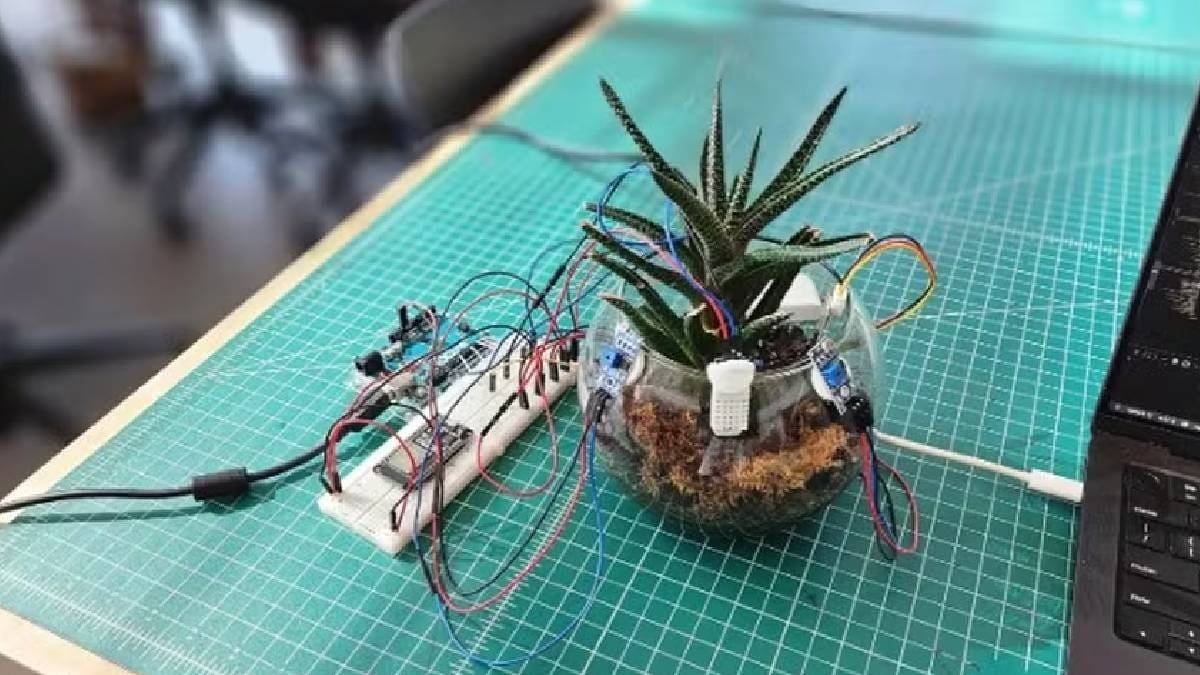
Okay, folks, buckle up because the future of houseplants just got a whole lot sassier. Remember those days of wondering if your fern was thirsty or just throwing shade? Well, say goodbye to plant-parenting guesswork, because a team of bright sparks has developed PlantGPT – and it’s about to turn your leafy friends into eloquent (and slightly sarcastic) roommates.
Flowers That Talk?! Scientists Stunned by Breakthr...
This isn’t your grandma’s botanical garden. PlantGPT, birthed from the minds of American university students, uses AI and a clever array of sensors to give plants a voice. And not just any voice – a British-accented female voice, no less! I’m picturing a very sophisticated Audrey II, minus the man-eating tendencies. The real kicker, though, is the irony. The system allows plants to express their needs with a dash of dry wit, making your ficus sound like it's fresh out of a Noel Coward play. Imagine your wilting peace lily muttering, “It might be time for some fertilizer to lift my spirits,” or your sun-starved succulent sighing, “You don't expect me to thrive under these unsuitable conditions, do you?” I chuckled when I first read that.
The project, which started way back in 2022 and wrapped up in 2025, has been causing quite a buzz in the scientific community. Joy Rutledge and Temple Dees, the masterminds behind this leafy revolution (and members of the Spelman College Team), believe that allowing plants to communicate their needs will fundamentally change how we care for them. And honestly, I can see it. How many times have I overwatered a poor innocent cactus because I just *thought* it looked a little droopy?
It's not just about avoiding horticultural homicide, though. This is about fostering a deeper understanding and connection with the green things around us. Giving plants a voice, even a sarcastic one, forces us to pay attention. It compels us to consider their needs, not just our aesthetic preferences. We are less likely to ignore a plant verbally expressing its needs. The Spelman College team's innovative work even snagged them first prize at the 2025 American Association for the Advancement of Science (AAAS) Innovation and Creativity Exhibition. Well deserved, I say!
So, what does this mean for the future of plant ownership? Will we soon be having full-blown conversations with our houseplants? Will we need to negotiate lighting conditions and watering schedules? Only time will tell. But one thing’s for sure: PlantGPT is a game-changer. It proves that with a little ingenuity, and a healthy dose of humor, we can unlock the secrets of the natural world and maybe, just maybe, become better plant parents in the process. Now, if you'll excuse me, I think my basil plant is trying to tell me something...
Comments
Please sign in with Google to post a comment
No comments yet. Be the first to comment!