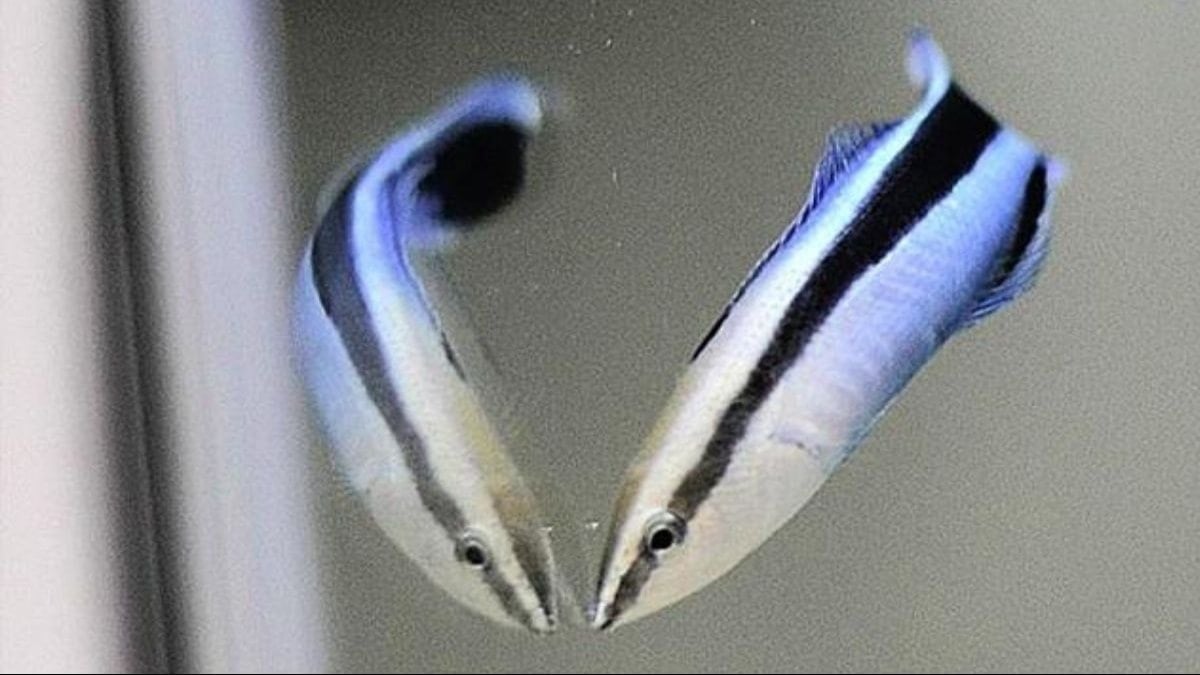
Tiny Fish, Big Brain? cleaner wrasse Passes Intelligence Test Previously Seen Only in Primates
Fish Smarter Than Monkeys?! Scientists Stunned By ...
It's easy to underestimate the intelligence of smaller creatures, especially when we're constantly bombarded with stories about super-smart primates and dolphins. But new research is turning that notion on its head. A fish, no bigger than your finger, the cleaner wrasse (Labroides dimidiatus), is proving that smarts aren't just for the big guys. This little marine marvel, usually found busily picking parasites off larger fish, has shown an ability to recognize its own reflection in a mirror, a feat previously thought to be the domain of a select few: primates, elephants, and dolphins.
This isn't just about vanity; it's about self-awareness. Scientists use the "mirror mark test" as a standard way to gauge this. The idea is simple: If an animal notices a strange mark on its body in a mirror and tries to remove it, it suggests they understand that the reflection is *them*. Think of it like noticing you have a smudge of dirt on your face and instinctively wiping it off in the bathroom mirror. We humans ace this test pretty early on. But until recently, the list of other species that could pass it was surprisingly short.
Now, the cleaner wrasse is making waves. The initial reports of the species passing the test came out in 2018, but immediately sparked debate. Some argued that the fish might just be reacting to what they perceived as a parasite on another fish, rather than understanding it was *themselves*. It's a fair point, and scientists, being the meticulous folks they are, weren't satisfied with a maybe. So, they dug deeper.
Researchers from Osaka Metropolitan University and the University of Neuchâtel in Switzerland refined their experimental approach, focusing on whether the fish could rapidly recognize the mark as their own. The core idea was to mark the fish *before* introducing them to the mirror. The experiment was designed in this way to determine if an understanding of self-awareness was pre-existing, which would further support the claim that these fish have self-recognition skills.
The results were striking. The fish rapidly began scraping against surfaces to try and remove the mark – an average of only 82 minutes. This speed, the researchers argue, points to a pre-existing awareness of something being amiss on their bodies. But it gets even more interesting. Some fish, in what the researchers are calling "condition testing", picked up small pieces of shrimp from the tank floor and brought them to the mirror, carefully watching the reflection and even touching the surface of the mirror with their mouths. It's almost as if they were trying to figure out what this strange "other" creature was, and how it worked. This willingness to explore the reflection's properties using external objects is pretty amazing in the world of animal cognition, and shows the need for ongoing research into animal intelligence.
Comments
Please sign in with Google to post a comment
No comments yet. Be the first to comment!