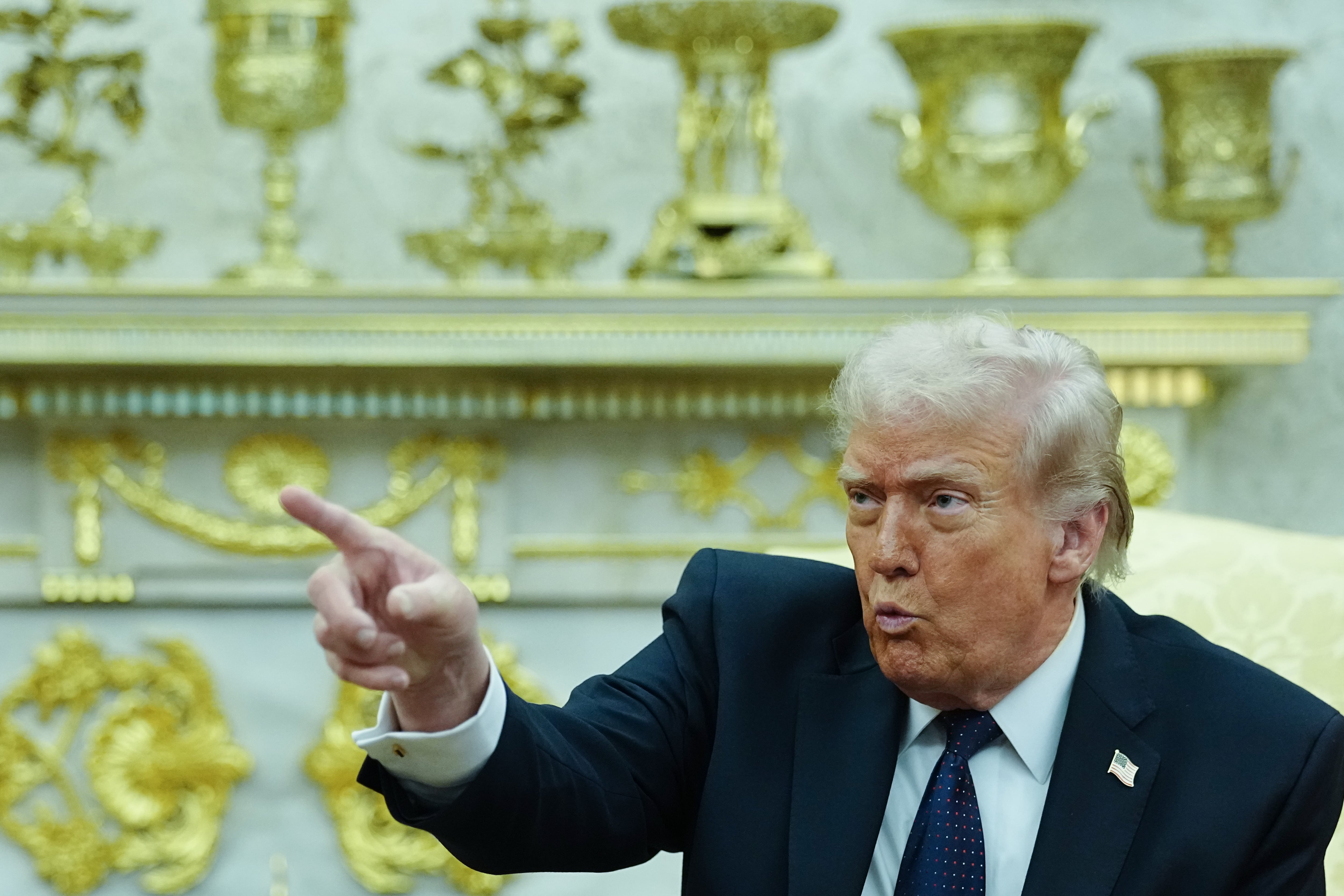
The Trump administration is facing increasing scrutiny over its rationale for engaging in military action against Iran, struggling to present a unified message amidst conflicting statements and rising public disapproval. The latest controversy stems from comments made by Secretary of State Marco Rubio, who has offered various explanations for the offensive, some of which contradict President Trump's own narrative.
Iran War Justification Fails! What's the REAL Stor...
President Trump, in a brief address from the Oval Office, reiterated that the attack was a necessary action to protect American interests. However, it's Rubio's evolving explanations that have really thrown fuel on the fire. Just what exactly *is* the justification, people are asking. Is it preemptive self-defense, or something else?
Rubio initially stated the offensive was launched to preempt a potential Iranian attack, a justification that seems to align with the administration's initial messaging. "The bottom line is this: The president determined we were not going to get hit first. It’s that simple," Rubio told reporters at the Capitol, seemingly trying to simplify a complex situation. But the "simple" explanation followed a much more convoluted statement made just the day before.
Before clarifying—or perhaps muddying—the waters, Rubio had suggested the offensive was linked to an impending Israeli action and a fear of retaliatory attacks from Iran. "We knew that there was going to be an Israeli action," Rubio said during a congressional appearance. "We knew that that would precipitate an attack against American forces, and we knew that if we didn’t preemptively go after them before they launched those attacks, we would suffer higher casualties.”
These remarks have ignited a firestorm of criticism. Democrats, in particular, have pounced on the perceived inconsistencies. Senator Mark Warner questioned, "There was a threat to Israel. If we equate a threat to Israel as the equivalent of an imminent threat to the United States, then we are in uncharted territory." Others, like Senator Angus King, have gone further, suggesting the conflict was "orchestrated by Benjamin Netanyahu," embroiling the US in a conflict it didn't need.
Public opinion is clearly turning against the military operation. A CNN poll reveals that nearly six in ten Americans disapprove of the military operation, while a Washington Post poll indicates 52% opposition and 39% support. The fear of another "forever war" in the Middle East, something Trump promised to avoid, looms large in the minds of many voters. Even voices on the right are questioning the administration's handling of the situation. "So he’s flat out telling us that we’re in a war with Iran because Israel forced our hand," tweeted Matt Walsh, a far-right commentator. "This is basically the worst possible thing he could have said."
The intended message, it seems, was to portray the offensive as a limited, justified response to an Iranian threat, consistent with the "America First" platform. But with each contradictory statement, the narrative unravels further, leaving the administration struggling to regain control of the message—and perhaps the situation itself. Iranian Foreign Minister Abbas Araghchi chimed in on social media, adding more fuel to the fire. "Mr. Rubio admitted what we all knew: US has entered a war of choice on behalf of Israel," he posted.
Comments
Please sign in with Google to post a comment
No comments yet. Be the first to comment!