Air travel. For many of us, it's a necessary evil. Delays, crowded skies, and the occasional white-knuckle landing are all part of the package. But what if I told you there's a project underway aiming to not just streamline the experience, but actually make it safer and more efficient? That's exactly what the Air traffic Management and Safety (ATMS) project is setting out to do.
Air Travel Nightmare: Safety Project Faces Critica...
Forget just reacting to problems as they arise. ATMS is pushing for a fundamental shift in Air traffic management, moving towards a more strategic, proactive approach. Think of it as less firefighting and more architectural planning for the skies. By developing and validating advanced technologies, they're hoping to create a system that's not only more efficient and productive, but also more resilient. Crucially, a big part of their goal is to reduce the costs associated with safety assurance in these increasingly automated systems.
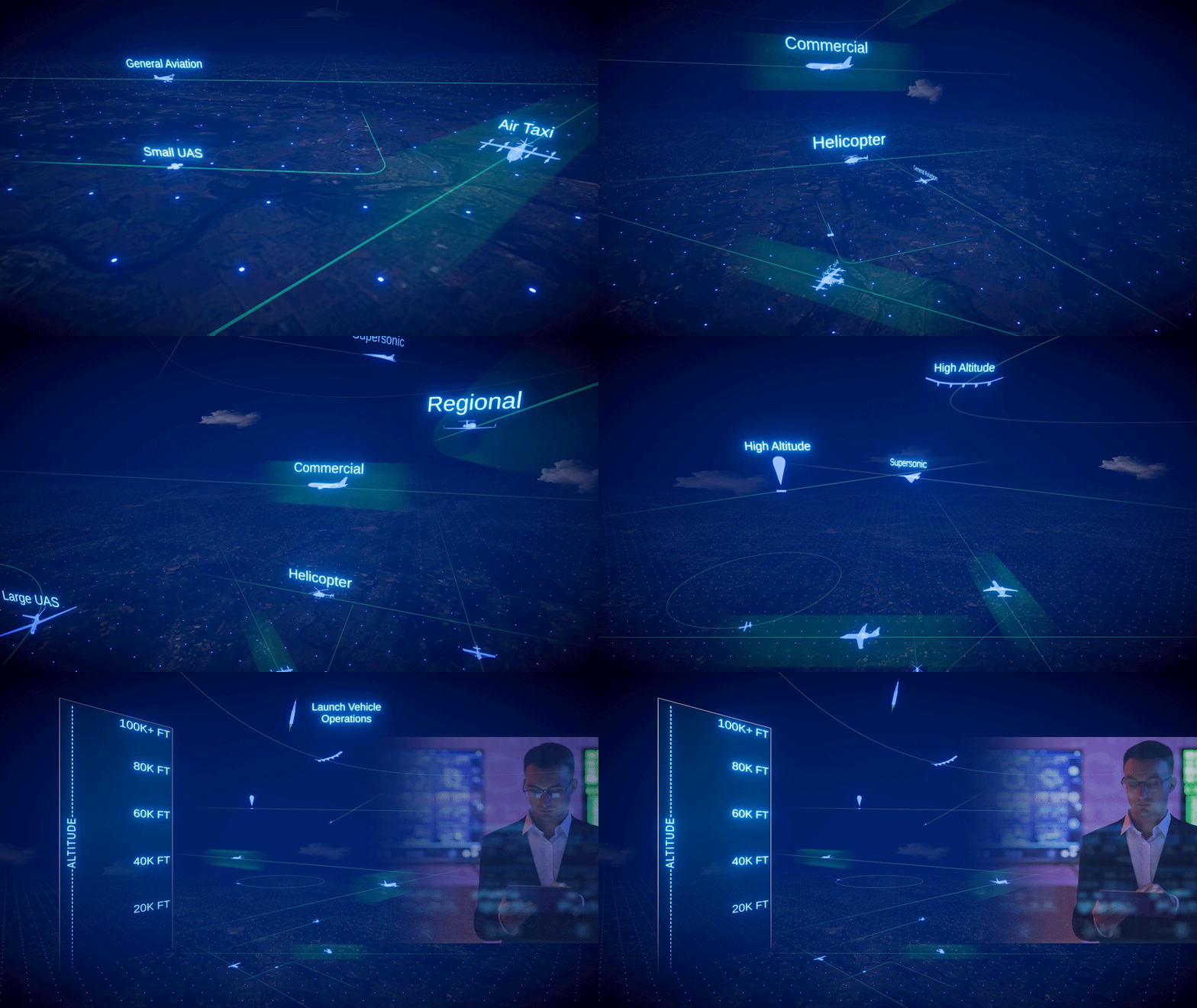
One of the most exciting aspects of the project is its focus on safely integrating new types of aircraft into our already busy airspace. We're talking about drones, air taxis, and other advanced air mobility vehicles. As demand for air travel continues to grow, figuring out how to manage this diverse mix of aircraft safely is paramount. And the fact that ATMS is working so closely with the FAA is a huge plus, ensuring that the solutions they develop are actually practical and implementable.
Beyond just new vehicles, ATMS is also looking at ways to reduce the cognitive workload of air traffic controllers. Let's be honest, those jobs are incredibly stressful. By automating certain tasks and providing better decision-support tools, the project aims to free up controllers to focus on the most critical situations. This, in turn, should lead to fewer delays, lower operating costs for airlines, and, most importantly, enhanced safety for everyone.
The project's research is centered around three key areas. First, they're working on "Strategic Harmonization for Integrated Flows and Trajectories." This is about moving away from reactive, tactical decisions and towards a more proactive management of traffic flows. Second, they're focused on safely enabling routine autonomous operations. This means developing technologies that allow for autonomous taxiing, approaches, and landings, making these processes more efficient and less reliant on human intervention. Finally, they're tackling "Assurance Methods for Aircraft Automation," ensuring that the automation technologies being developed are safe, reliable, and trustworthy.
It's a complex undertaking, no doubt. But if ATMS can deliver on its promises, we could be looking at a future where air travel is not only more efficient and affordable but also significantly safer. And that's something we can all get behind.
Comments
Please sign in with Google to post a comment
No comments yet. Be the first to comment!