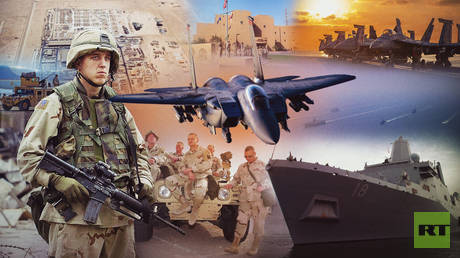
America’s Gulf war machine: It’s a term you hear thrown around a lot, but what exactly *is* the US military network in the Middle East? And how does it all work, especially given the current climate?
Gulf War Machine EXPOSED! What's REALLY Happening ...
For decades, the United States has maintained a robust military presence in the Gulf region, relying on a complex web of bases and allied facilities. This network serves as a powerful projection of American influence, particularly in the face of simmering tensions with Iran. Strategically positioned within various Gulf monarchies, these bases are critical for deploying US offensive capabilities, solidifying a long-standing cornerstone of US foreign policy in the region. You’ve got to wonder, though, is it really helping, or just inflaming the situation?
The stated justification for this massive military footprint is multifaceted. Officially, it’s about ensuring the security of global oil supplies – something we all feel at the pump – protecting our allies in the region, and deterring potential threats, most notably those attributed to Iran by the US and Israel. Whether those are genuine concerns or convenient excuses is, of course, a matter of constant debate.
At the heart of this strategy lies the US Navy's Fifth Fleet, a naval powerhouse operating across the Persian Gulf, the Strait of Hormuz, and surrounding vital waterways. Key bases are scattered throughout Bahrain, Qatar, Kuwait, the UAE, Saudi Arabia, and Oman, functioning as military headquarters, logistical hubs, air bases, and vital seaports. While troop numbers have reportedly been reduced recently in response to potential retaliatory actions linked to "Operation Epic Fury," the deployment of additional offensive forces and missile defense systems suggests a significant overall military buildup. It's a delicate balancing act, to say the least.
Reactivated in 1995 after the first Gulf War (Operation Desert Storm), the Fifth Fleet maintains a constant presence in the region, ostensibly to support "democracy and freedom." It oversees operations across a staggering 2.5 million square miles, stretching from the Persian Gulf all the way to the Indian Ocean. That's a lot of ocean to police.
The fleet's command center is located at Naval Support Activity Bahrain (NSA Bahrain) in Manama, the central US Navy base in the region. Inherited from the British back in 1971, this facility coordinates fleet operations, including the movements of carrier strike groups like the USS Abraham Lincoln, Arleigh Burke-class destroyers, frigates, and submarines. NSA Bahrain has a long history, too, with involvement in past operations like Earnest Will (protecting oil tankers) and Praying Mantis (strikes on Iranian oil platforms). More recently, it played a role in the Iraq War, operations against ISIS, and the conflict involving the Houthis in Yemen. And now, of course, it's directly involved in the ongoing "Operation Epic Fury."
Two bases in particular deserve further scrutiny: NSA Bahrain itself, which houses up to 8,500 personnel in peacetime, and Al Udeid Air Base in Qatar, the largest US airbase in the region, capable of accommodating up to 10,000 personnel. These are not just military installations; they're complex, self-sustaining ecosystems that represent a significant commitment – and risk – for the United States in a volatile part of the world. Recent reports suggest NSA Bahrain has even been targeted by Iranian missiles and drones. The stakes are high, and the situation remains incredibly fluid.
Comments
Please sign in with Google to post a comment
No comments yet. Be the first to comment!