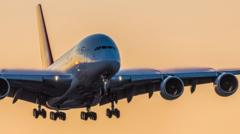
Flight paths squeezed as Iran conflict closes more Airspace
Iran Conflict CHAOS: Flight Routes Squeezed! What ...
A drone attack in Azerbaijan has further complicated matters for airlines already struggling with disruptions stemming from heightened tensions in the Gulf region. What was already a tricky situation is now becoming even more challenging for an industry constantly trying to balance safety, efficiency, and cost.
The closure of Airspace over southern Azerbaijan, following the recent drone strike, is adding immense pressure to an industry already grappling with the fallout from regional conflict. This area is normally a key hub for global air travel, so the initial disruptions were significant. However, this latest incident has now forced many flights into an even narrower corridor across the country's northern region. It's a squeeze, plain and simple, and one that's impacting flight times and potentially, airline bottom lines.
"There's a very tight range of options for airlines right now," aviation expert John Strickland pointed out, highlighting the precarious balancing act airlines face. Consider this: Western airlines have been avoiding Russian airspace, including Siberia, ever since the 2022 invasion of Ukraine. Now, on top of that, flights are also steering clear of Iranian and Iraqi airspace, forcing them to find alternative routes either to the north or the south. This is turning into a real logistical headache.
Data from Flightradar24 paints a clear picture, showing real-time congestion in a roughly 100km-wide strip across northern Azerbaijan, a country, for context, that's roughly the size of Portugal. Imagine all that air traffic being funneled through such a small space.
Gulf airlines, to their credit, have increased operations from the UAE and Oman to evacuate stranded travelers. However, flights from Qatar remain grounded, and overall capacity is significantly below normal, according to Opsgroup, an industry risk information provider. It's a mixed bag, some are doing what they can, others are stuck on the ground.
"The central corridor across Iran, Iraq, and the Gulf is effectively closed, so most traffic is going either north via the Caucasus and Afghanistan, or south via Egypt/Saudi/Oman," explained David Mumford, international operations specialist at Opsgroup. "Both routes are longer and busier than usual, so flight times and fuel burn are higher." In other words, expect delays and higher ticket prices down the line, folks.
Air traffic sharply declined after the initial attacks began, as airlines were forced to adapt and use the more limited corridors. That immediate reaction speaks volumes about the severity of the situation.
Strickland anticipates passengers may experience longer flight times due to the extended routings. "Flights already doing circuitous routing have even less choice," he said. Think about already long-haul flights becoming even longer - not exactly a recipe for happy travelers.
Some airlines had, wisely, begun adjusting routes in recent weeks as tensions in the Gulf escalated. Now, even more flights are being forced to switch to routes further south to avoid the conflict zone. This represents "another big complication for airlines' planning" on top of existing factors like weather and those pesky knock-on effects of delays. It feels like one thing after another for these airlines.
While most airlines aren't currently adding extra stops to accommodate the longer routes, Qantas has added a Singapore refuelling stop to its non-stop Perth to London flight, Strickland noted. And, of course, most flights to India will also take longer, using routes south of the Gulf. Even seemingly minor adjustments can have a ripple effect across the entire network.
David Kaminski, air transport editor at Flight Global, a specialist news service, rightly pointed out that close attention will be paid to any further incidents in Azerbaijan. It's a small country, but as Kaminski noted, Azerbaijan, an oil-rich former Soviet republic bordering Russia, Iran, Armenia, and Georgia, is strategically important. Any further instability there could have serious ramifications for global air travel.
Comments
Please sign in with Google to post a comment
No comments yet. Be the first to comment!