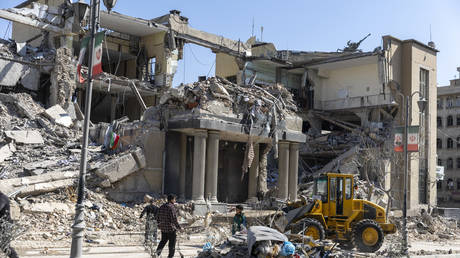
Well, folks, it looks like things in the Middle East are heating up even further. Amidst the ongoing air war with Iran, the US has just greenlit an emergency sale of some pretty serious firepower to Israel. We're talking 12,000 bombs, each packing a thousand pounds of punch. Yeah, you read that right.
Critical Move: US Approves Bomb Sale to Israel Ami...
According to reports, West Jerusalem put in the request for these munitions as the conflict with Iran stretches into its eighth day – a conflict that seems to be escalating rather quickly, I might add. And while these kinds of arms deals usually involve a bit of back-and-forth with Congress, the State Department decided to fast-track this one, citing the urgency of the situation.
The official line from the State Department is that this move is all about bolstering US foreign policy and national security. They're framing Israel as a "key regional ally" vital for stability and economic progress in the Middle East. I mean, that's the standard talking point, isn't it? The idea is that giving Israel this kind of firepower will help them deal with current and future threats, strengthen their defenses, and deter any potential troublemakers in the region. It's a familiar argument, but one that always raises questions about the potential consequences.
This deal, reportedly worth around $151.8 million, involves those BLU-110A/B bombs. These aren’t exactly small potatoes; these are serious pieces of ordnance. The decision to bypass congressional review under the Arms Export Control Act definitely raises eyebrows. It begs the question, “Just how urgent is this situation?” And perhaps more importantly, "What are the long-term ramifications of injecting this much explosive power into an already volatile region?"
Look, I'm no geopolitical expert, but it seems to me that throwing more fuel on the fire is rarely the best solution. While the US government argues this sale is about security and stability, one can't help but wonder if it will only serve to escalate tensions even further. Only time will tell how this plays out, but one thing's for sure: this is a development that demands close attention. We need to be asking tough questions about the direction we're heading and the potential costs of these decisions.
Comments
Please sign in with Google to post a comment
No comments yet. Be the first to comment!