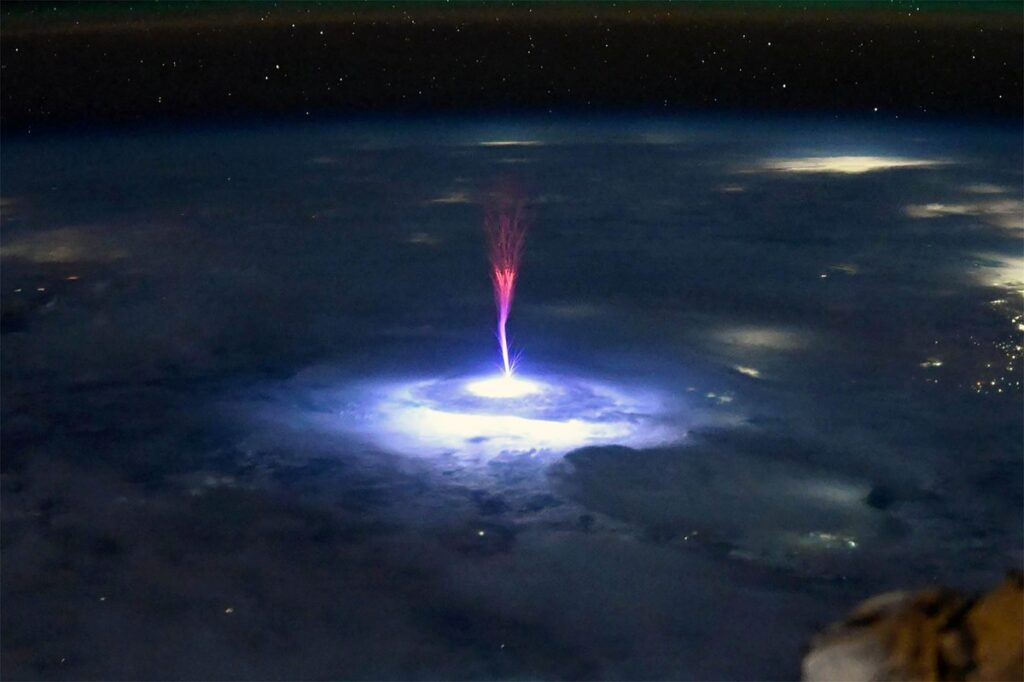
Astronauts aboard the International Space Station (ISS) have captured some truly breathtaking images recently, offering a rare glimpse of bizarre lightning phenomena erupting high above our planet's familiar cloud cover. NASA just released the photos, and they're something to behold.
Astronauts Stunned! NASA Captures Unbelievable Lig...
These elusive events, known as Transient Luminous Events (TLEs), are basically lightning's weird, otherworldly cousins. They happen so far up – way beyond where we normally see lightning from the ground – that they're nearly impossible to observe from down here. But, thanks to specialized cameras and the unique vantage point of the ISS, scientists are finally getting a clearer picture of these mysterious flashes. And what they're learning could have some serious implications for everything from weather forecasting to aviation safety, and even how we communicate via radio.
Think about it: we're used to experiencing thunderstorms from below, right? The rumble of thunder, a flash of lightning illuminating the sky. But imagine an even stranger, more ethereal spectacle unfolding *above* the clouds. These TLEs are incredibly fleeting and faint, which explains why they’ve been the stuff of legends for so long. For years, all we had were anecdotal reports from pilots and the occasional lucky snapshot. Now, the ISS is completely changing the game.
Orbiting about 400 kilometers above Earth, the ISS gives astronauts and their instruments a bird's-eye view of storms, making it much easier to spot these unusual bursts of light. The Atmosphere–Space Interactions Monitor (ASIM), a European Space Agency piece of tech attached to the outside of the ISS since 2018, is crucial to this. ASIM was specifically built to study lightning and other electrical phenomena from space. Its super-fast cameras and sensors are so sensitive they can pick up flashes smaller than your fingernail, flashes that last only a fraction of a second. Pretty amazing, right?
ASIM has already recorded thousands of these events. This wealth of data is helping scientists figure out how energy from thunderstorms can travel upwards into the ionosphere, which is that charged region of the atmosphere so important for radio communication. I remember learning about the ionosphere back in school; never imagined lightning had anything to do with it!
One particularly interesting phenomenon being studied are ELVES rings. These are enormous, rapidly expanding circles of ultraviolet light triggered by particularly powerful lightning strikes. These rings can spread across hundreds of kilometers almost instantly, potentially disrupting the electrical balance of the upper atmosphere. It's like a giant cosmic ripple effect.
And it's not just automated instruments doing the work. Astronauts are actively involved in capturing these rare events, too. The Cupola, the ISS's famous observation dome with its seven huge windows, gives them a panoramic view of Earth. These images are more than just pretty pictures; they allow scientists to compare real-world storms with laboratory experiments, which is helping us understand the underlying physics. All this detailed knowledge of lightning could eventually lead to better ways to protect our power grids and even airplanes from severe electrical storms. You never know, maybe one day we'll have lightning shields! Well, one can dream.
Comments
Please sign in with Google to post a comment
No comments yet. Be the first to comment!