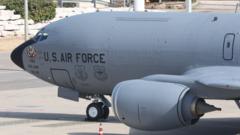
All six crew members aboard a U.S. military KC-135 Stratotanker are now confirmed dead after the aircraft crashed in western Iraq on Thursday, U.S. Central Command (Centcom) announced. This is a tough blow, especially given the already heightened tensions in the region.
Iraq Crash: US Plane Down, All Crew Lost! What Wen...
Initial reports had indicated the recovery of four bodies, but the search and rescue operation, sadly, concluded with the recovery of the remaining two. Centcom has stated definitively that neither hostile fire nor friendly fire played a role in the crash. But, as we'll see, that statement is already being questioned.
The KC-135, a Boeing-manufactured refueling aircraft, is absolutely crucial for extending the reach of U.S. combat aircraft. These tankers, some of them decades old, are the unsung heroes that allow our planes to stay in the air longer. They were instrumental in the first Gulf War, and they continue to be vital today. The plane in question was supporting ongoing U.S. operations against Iran and was flying with a second aircraft that landed safely.
Gen. Dan Caine, Chairman of the U.S. Joint Chiefs, confirmed at a Friday news conference that the plane crashed "while the crew was on a combat mission." U.S. Defense Secretary Pete Hegseth went further, hailing the crew members as "American heroes" and emphasizing that their "sacrifice will only recommit us to the resolve of this mission." Strong words, but are they masking the real situation?
Centcom initially described the crash as occurring over friendly airspace. However, this region is far from stable, and is known to be active with pro-Iranian militias. Iranian state TV is already claiming that an allied group targeted the plane with a missile. It's important to note this claim hasn't been independently verified, but the suspicion is certainly out there. We will continue to monitor the independent confirmations.
This crash brings the official U.S. military death toll in the U.S.-Israel war with Iran, which began two weeks ago, to 13. The U.S. military has now lost at least four aircraft during the conflict. Earlier this month, there was that reported "friendly fire incident" over Kuwait involving three F-15s, although thankfully, all six crew members ejected safely. It's hard not to see a worrying trend here.
The situation is further complicated by Israel's announcement of a fresh "wide-scale wave of strikes" targeting Iranian infrastructure across Tehran on Friday. Explosions were reported in and near the Iranian capital, adding fuel to an already raging fire. Meanwhile, the U.S. recently loosened sanctions on countries purchasing Russian oil, a move seemingly aimed at mitigating the economic fallout of this conflict. The global implications are staggering.
As if that weren't enough, oil prices climbed above $100 a barrel on Thursday, and stock markets are declining. The situation in the Gulf is precarious, with Iran's new supreme leader vowing to continue blocking the Strait of Hormuz, a critical shipping lane. U.S. President Donald Trump has suggested the war could end "very soon" due to rising oil prices. Whether that's wishful thinking or based on concrete intelligence remains to be seen. One thing is clear: this is a volatile situation with potentially devastating consequences.
Comments
Please sign in with Google to post a comment
No comments yet. Be the first to comment!