**UN Approves US-Led Plan for Gaza's Future, Including Stabilization Force**
Gaza's Next Chapter: UN Greenlights US Vision, Com...
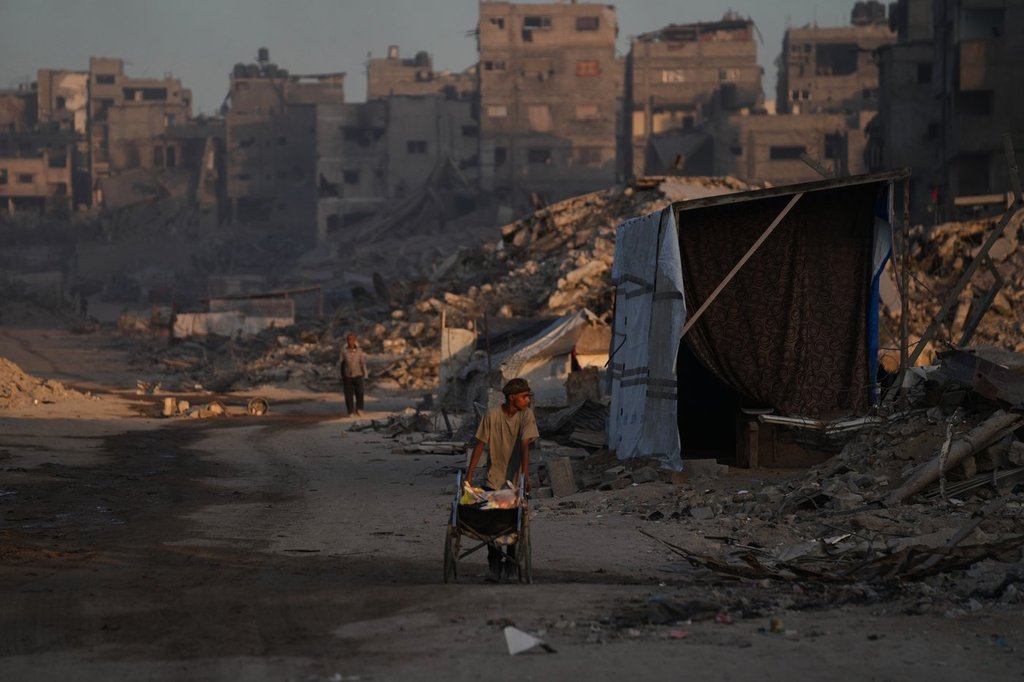
The United Nations Security Council has greenlit a U.S.-backed resolution outlining a path forward for Gaza, authorizing an international stabilization force to provide security in the war-torn territory and subtly hinting at a future for Palestinian statehood. The resolution, a revision of President Trump’s initial 20-point ceasefire plan, passed with a 13-0 vote, with Russia and China abstaining. This averted a potential veto from Moscow, which had previously circulated its own, competing proposal.
The U
The U.S. resolution endorses Trump's original plan, which calls for the establishment of a Board of Peace, a transitional authority led by Trump himself. This board, along with the newly authorized stabilization force, would have a broad mandate, including border control, security provision, and the demilitarization of Gaza. The authorization for both the board and the force is set to expire at the end of 2027.
U.S. Ambassador Mike Waltz hailed the resolution as "historic and constructive," emphasizing its potential to usher in a new era of stability in the Middle East. He stressed that the resolution marks only the beginning of a long and complex process.
A key revision to the original plan, and a point of contention, is the inclusion of language suggesting a pathway to Palestinian self-determination. The resolution states that after reforms within the Palestinian Authority (which currently governs parts of the West Bank) and the redevelopment of Gaza, "the conditions may finally be in place for a credible pathway to Palestinian self-determination and statehood." The U.S. has also pledged to facilitate dialogue between Israel and the Palestinians to establish a "political horizon for peaceful and prosperous coexistence."
This language has already drawn criticism
This language has already drawn criticism from Israeli Prime Minister Benjamin Netanyahu, who has long opposed the creation of a Palestinian state, arguing it would reward Hamas and potentially lead to an even larger, Hamas-controlled territory bordering Israel.
Crucially, the resolution garnered support from several Arab and Muslim nations, including Qatar, Egypt, the United Arab Emirates, Saudi Arabia, Indonesia, Pakistan, Jordan, and Turkey. These nations, who potentially will contribute to the international force, issued a joint statement urging the resolution's swift adoption.
Russia's rival proposal, which was ultimately sidelined, featured stronger language supporting a Palestinian state alongside Israel and emphasized the need for the West Bank and Gaza to be united under the Palestinian Authority. It also removed references to the transitional board and tasked the UN Secretary-General with exploring options for the international force. While Russia abstained from voting on the U.S. resolution, its initial proposal underscores the complexities and competing visions for the future of Gaza and the wider Israeli-Palestinian conflict.
Comments
Please sign in with Google to post a comment
No comments yet. Be the first to comment!