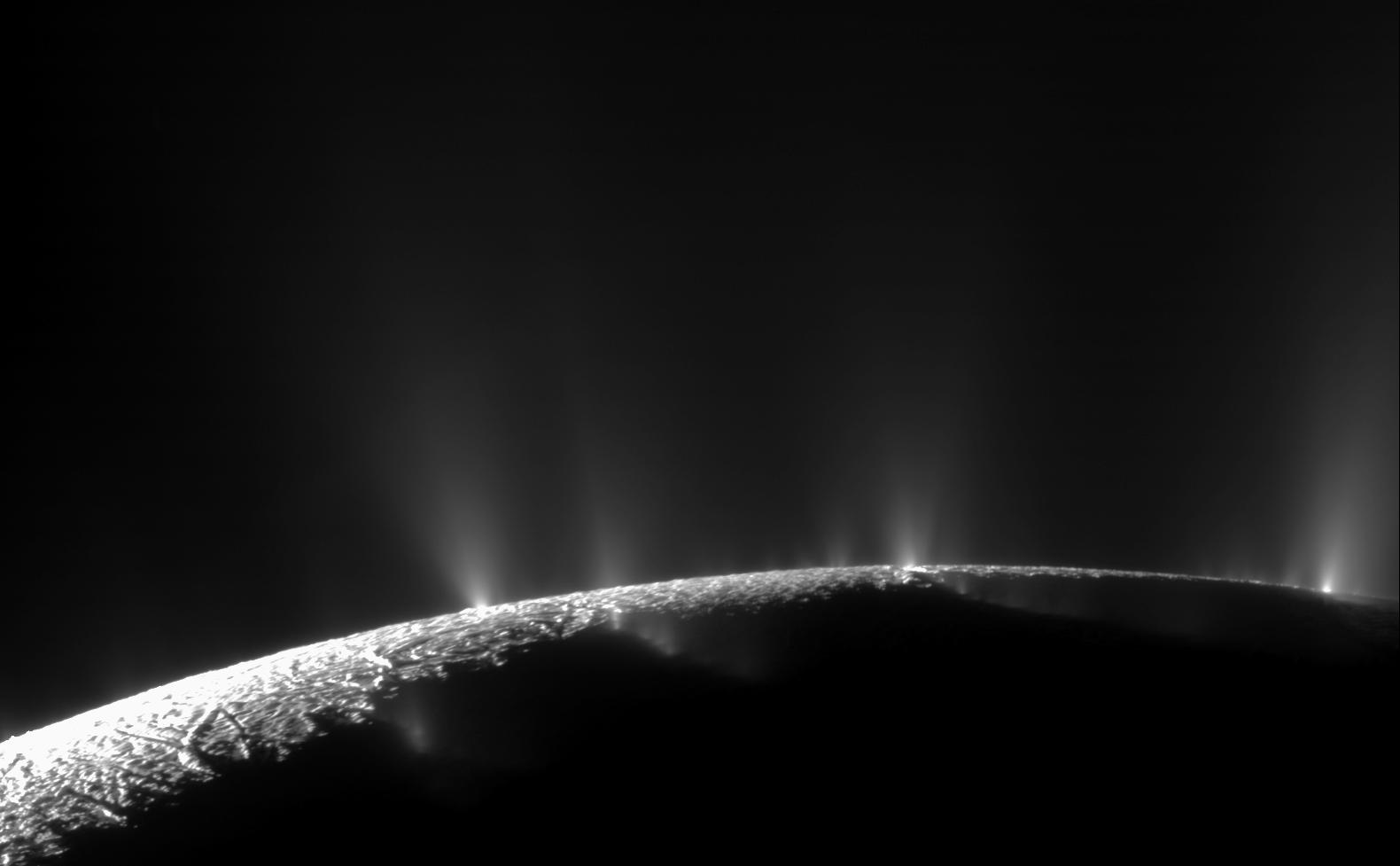
Fresh Organic Compounds Found Spewing from Enceladus' Ocean: A Step Closer to Life?
It's not every day that we get a whiff of something truly exciting in the search for life beyond Earth. But new analysis of data from NASA’s Cassini mission, published just yesterday in *Nature Astronomy*, has delivered a potentially game-changing discovery: fresh, previously undetected organic compounds blasting from the ocean beneath the icy shell of Saturn's moon, Enceladus.
Enceladus' Ocean Sprays Hint at Life's Building Bl...
Now, Cassini has been defunct for a while, dramatically plunging into Saturn's atmosphere back in 2017. But the data it collected continues to yield incredible insights. This time, researchers dug deep into information gathered during a super-fast flyby through one of Enceladus's famous plumes – those geysers of water ice and vapor erupting from the south pole.
What they found wasn't just more
What they found wasn't just more of the same. Scientists spotted a whole host of organic molecules, including new ones that, according to the research team, could potentially lead to chemical or even biochemical activity. I mean, think about that for a second.
These ice grains, collected a mere 13 miles from the moon's surface, represent the freshest sample of Enceladus's subsurface ocean we've ever seen. It's like a cosmic sneeze, giving us a glimpse into the watery depths without having to drill through miles of ice.
"Previously, we detected organics in ice grains that were years old and potentially altered by the intense radiation environment surrounding them," explained Nozair Khawaja of the Freie Universität Berlin, the study's lead author. "These new organic compounds were just minutes old, found in ice that was fresh from the ocean below Enceladus’ surface.” This makes all the difference.
What's particularly exciting is that this
What's particularly exciting is that this research isn't just about detecting the presence of *any* organics. It's about finding complex molecules that could potentially support compounds vital to biological processes – the kind we see as essential components of life on Earth.
The key here is the "freshness" of the samples. Previous findings hinted at nitrogen- and oxygen-bearing organic compounds in Saturn's E ring, a vast ring of ice particles supplied by Enceladus's plumes. However, there was a question of whether those organics had been modified by long exposure to the harsh conditions of space. This new analysis looked directly at plume material, as close as possible to its source.
Frank Postberg, also from Freie Universität Berlin and a co-author on the study, said that the molecules found in the freshly ejected material prove that complex organic molecules aren't just the result of long exposure to space, but are readily available in Enceladus' ocean.
Of course, finding organic molecules isn't the same as finding life. But this discovery adds a crucial piece to the puzzle. It suggests that the conditions on Enceladus may be even more conducive to life than we previously thought. And honestly, that's pretty darn exciting. It’s just another reminder of how much we still have to learn about our solar system and, well, about the potential for life beyond our little blue planet.
Comments
Please sign in with Google to post a comment
No comments yet. Be the first to comment!