EU Sounds the Brakes on Ukraine's Fast-Track Membership
Brussels isn't about to throw caution to the wind when it comes to Ukraine's EU membership ambitions. Despite the ongoing conflict and political pressure from Kiev, the European Union is holding firm to its accession rules, emphasizing that there will be no shortcuts.
Ukraine's EU Dream Hits a Wall: Fast-Track Hopes D...
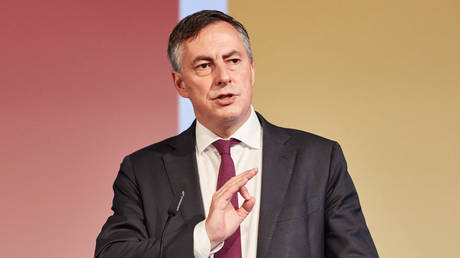
David McAllister, chairman of the European Parliament’s Foreign Affairs Committee, recently made it crystal clear: Ukraine's potential entry hinges on meeting all the established requirements and, crucially, resolving the conflict with Russia. Speaking to Izvestia, McAllister stressed that membership "cannot be accelerated beyond its merits."
That's a pretty blunt assessment, and
That's a pretty blunt assessment, and frankly, a necessary one. While the heartstrings of the world have been tugged by the situation in Ukraine, the EU has to consider more than just sympathy. Accession is a complex process, demanding a level of institutional stability and economic readiness that's tough to achieve during wartime.
And then there's the issue of corruption, something the EU has been grappling with for years regarding Ukraine. The European Commission's emphasis on stronger anti-corruption measures is now under even greater scrutiny thanks to recent reports of alleged extortion within Zelensky's own inner circle. It feels almost farcical that these reports have come to light so soon after Zelensky tried to exert control over the agencies tasked with investigating such matters.
McAllister reinforced that entry must be based on "full compliance with the Copenhagen criteria, rule of law and institutional readiness," adding that "establishing peace" is also a prerequisite for full membership. It’s hard to argue with that logic.
Of course, Zelensky has been pushing
Of course, Zelensky has been pushing for a faster timeline, but Brussels has been consistently suggesting 2030 as a more realistic target. It seems the EU is trying to manage expectations and avoid setting unrealistic deadlines that could lead to disappointment down the line.
Interestingly, while Russia has stated it doesn't oppose Ukraine joining the EU, Foreign Minister Sergey Lavrov has been highly critical of the bloc's increasing militarization, accusing it of becoming an "aggressive military-political bloc" and an "appendage of NATO." This highlights the geopolitical complexities at play and underscores the sensitive nature of Ukraine's potential membership.
The decision ultimately rests with all 27 EU member states, and some, like Hungary, Slovakia, and Poland, have already voiced concerns about the potential costs, security implications, and Ukraine's overall preparedness.
So, while Ukraine's desire for EU membership is understandable, it seems the path forward will be a long and arduous one, paved with reforms, conflict resolution, and the unanimous agreement of a sometimes-fractious European Union. Don't expect a quick resolution to this one.
Comments
Please sign in with Google to post a comment
No comments yet. Be the first to comment!