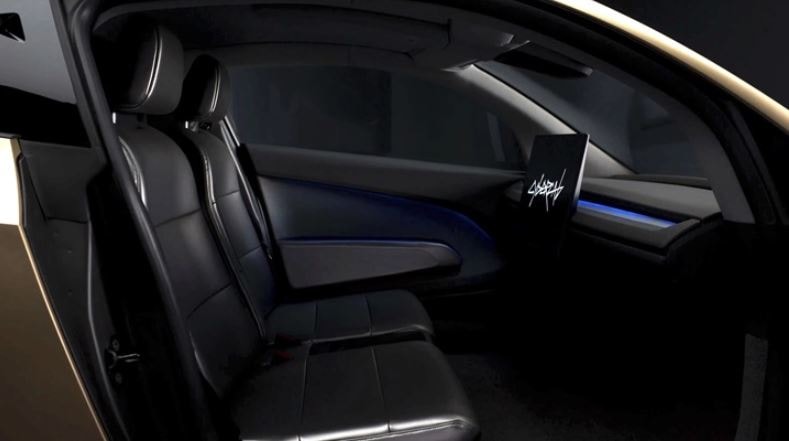
Tesla Sets Sights on Driverless Future: Cybercab Production Slated for 2026
Elon Musk's vision of a fully autonomous future took a significant leap forward this week with the announcement that Tesla plans to begin mass production of its Cybercab in April 2026. This revolutionary vehicle, designed without a steering wheel or pedals, signals a bold move towards a truly driverless transportation landscape.
Musk Ditches Wheels: Is This the Future of Driving...
Speaking at Tesla's shareholder meeting, Musk revealed that the Cybercab, an all-electric robotaxi, will be manufactured at the company's Gigafactory in Austin, Texas. The vehicle is envisioned as a purpose-built autonomous platform, entirely reliant on Tesla's self-driving technology. Even traditional side mirrors have been omitted, further emphasizing the company's commitment to a driverless experience.
The Cybercab is positioned as a
The Cybercab is positioned as a key component in Tesla's long-term strategy for autonomous driving. Musk emphasized that the vehicle is engineered to operate completely independently, providing robotaxi services at the lowest possible cost per kilometer. This ambition hinges on achieving Level 5 autonomy, the highest level of automation, where the vehicle can handle all driving tasks in all conditions without human intervention.
Beyond the technological leap, Musk also highlighted the impressive production efficiency planned for the Cybercab. He claimed a remarkably short production cycle of just 10 seconds per vehicle, potentially enabling an annual output of 2 to 3 million units. To put this in perspective, Musk noted that the assembly of a Tesla Model Y currently takes approximately one minute. This ambitious production target underscores Tesla's confidence in the scalability of its autonomous vehicle program.
Furthermore, the Cybercab, alongside the Tesla Semi, is slated to utilize the company's next-generation 4680 batteries starting in 2026. These advanced batteries promise improved energy density and performance, crucial for maximizing the range and efficiency of Tesla's electric vehicles.
The announcement of the Cybercab production timeline marks a pivotal moment for Tesla and the broader automotive industry. While regulatory hurdles and technological challenges remain, the company's commitment to driverless technology is clear. The Cybercab represents a tangible step towards a future where transportation is increasingly autonomous, potentially reshaping urban landscapes and transforming the way people move. The world will be watching closely as Tesla races towards its ambitious 2026 production target.
Comments
Please sign in with Google to post a comment
No comments yet. Be the first to comment!