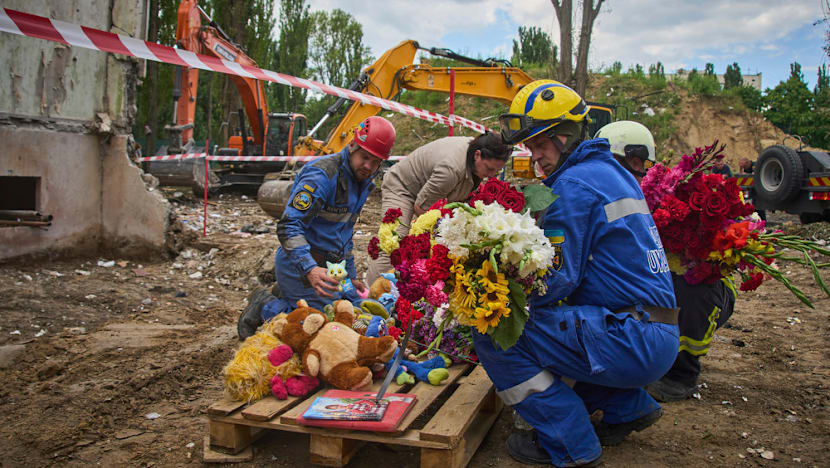
BANGKOK – As the shadow of Russia's invasion stretches into its fourth year, Ukrainian Nobel laureate Oleksandra Matviichuk is delivering a stark message to the world: neutrality is not an option. In a recent interview, the human rights advocate urged nations sitting on the sidelines to confront the profound human cost of the ongoing conflict.
Nobel Winner's SHOCK Plea: Will It Stop Putin's Wa...
"I firmly believe that neutrality in the face of human suffering is untenable," Matviichuk declared. "You cannot be neutral when international law, which protects us all, is being violated." It's a powerful statement, one that cuts through the often-complex web of international politics and gets straight to the heart of the matter: human lives are at stake.
Matviichuk, the head of the Kyiv-based Center for Civil Liberties – an organization rightly recognized with the Nobel Peace Prize in 2022 – is no stranger to the realities of war. Her organization has been on the ground documenting atrocities, gathering evidence, and fighting for justice amidst the chaos. During her recent visit to Bangkok, she spoke with CNA, painting a picture of life in Ukraine marked by uncertainty, loss, and a remarkable resilience in the face of unimaginable adversity.
One of the core issues she highlighted is Russia's unique position within the United Nations. As a permanent member of the Security Council, Russia wields veto power, effectively blocking any UN resolution, regardless of the overwhelming international consensus. This, she argues, makes neutrality all the more problematic. "To claim neutrality is, in effect, to take a side. In this situation, failing to assist Ukraine in resisting aggression is tantamount to aiding Russia's occupation," she asserted.
I remember when the International Criminal Court issued an arrest warrant for Putin last year, citing the war crime of abducting Ukrainian children. It felt like a significant step, but Matviichuk rightly points out that existing legal mechanisms are simply not enough. "A significant accountability gap persists in international law," she explained. "No international court currently possesses the jurisdiction to prosecute Putin and the top political and military leadership for the crime of aggression." That's why she's been so vocal about the need for a special tribunal, a dedicated forum to hold those at the highest levels accountable for their actions.
Her recent Asian tour, including stops in the Philippines and Taiwan, underscores the global implications of this conflict. In Bangkok, she addressed a forum focusing on the war's impact on Southeast and East Asia. It’s a reminder that this isn't just a regional conflict; it’s a challenge to the entire international order. "We are fighting for the freedom to exist as an independent state, not as a Russian colony," she stated. "These are fundamental aspirations that resonate with people everywhere." It's a fight for sovereignty, for human rights, and for the very principles that underpin a peaceful world.
Comments
Please sign in with Google to post a comment
No comments yet. Be the first to comment!