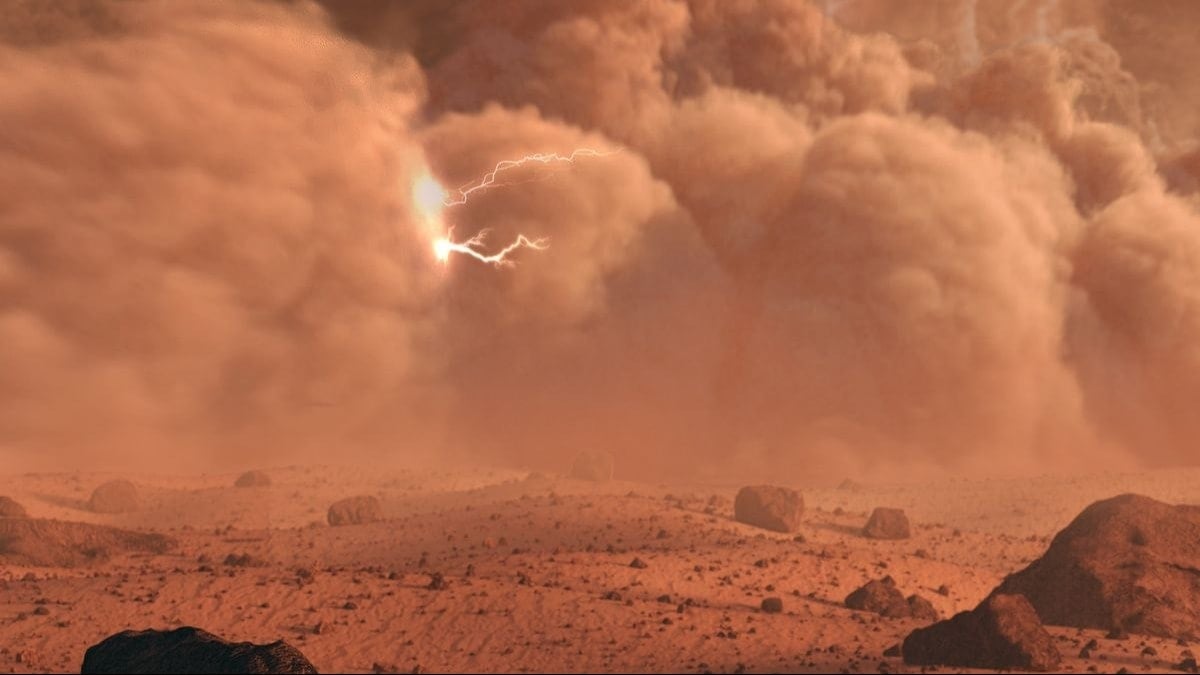
Well, folks, it seems Mars is getting a little more electrifying these days. NASA's Perseverance rover has just confirmed something pretty darn cool: lightning on Mars. Yes, you read that right. After years of speculation, we finally have proof that those red dust storms aren’t just visually impressive, they're packing some serious electrical punch, too.
NASA Stunned: Lightning Strikes on Mars! What Will...
The team behind this discovery sifted through a whopping 28 hours of audio recordings captured by Perseverance's SuperCam microphone. Talk about dedication! What they found were 55 distinct electrical events occurring during dust storms and those whirling dervishes we call dust devils. I've seen some pretty intense dust devils here in the desert Southwest, but imagining them crackling with electricity on another planet? That's something else.
Out of those 55 events, seven were complete lightning discharges. Each one started with that tell-tale electromagnetic interference and ended with a tiny "thunderclap" sound – a direct result of the rapid expansion of air heated by the electrical discharge. Imagine hearing that on Mars! It's a faint whisper of thunder across the solar system, a sound that travels millions of miles to reach our ears, thanks to Perseverance.
Interestingly, almost all of these electrical events occurred during periods of strong winds. This suggests that it’s not just the dust itself, but the sheer force of those Martian winds that's crucial for generating the electricity. It's like a planetary-scale static electricity experiment! And while these Martian lightning strikes are pretty tame compared to the billion-joule zaps we get here on Earth (the strongest recorded was only 40 millijoules), the implications are huge.
Think about it: understanding the electrical environment on Mars is vital for planning future missions. We need to know how this electrical activity might affect our rovers, landers, and even, one day, human habitats. Beyond that, the presence of lightning opens up exciting possibilities for astrobiology. Some theories suggest that lightning played a key role in sparking life on Earth. Could similar processes be at play on Mars, however unlikely? It’s a question worth exploring.
Baptiste Chide, the lead researcher on this project, rightly points out that these findings necessitate a re-think of our current models of the Martian atmosphere. This research, published in *Nature*, is more than just a cool discovery; it’s a paradigm shift. It adds another layer of complexity and intrigue to the Red Planet, reminding us that even on seemingly barren worlds, there are still secrets waiting to be unearthed – or, in this case, overheard.
Comments
Please sign in with Google to post a comment
No comments yet. Be the first to comment!