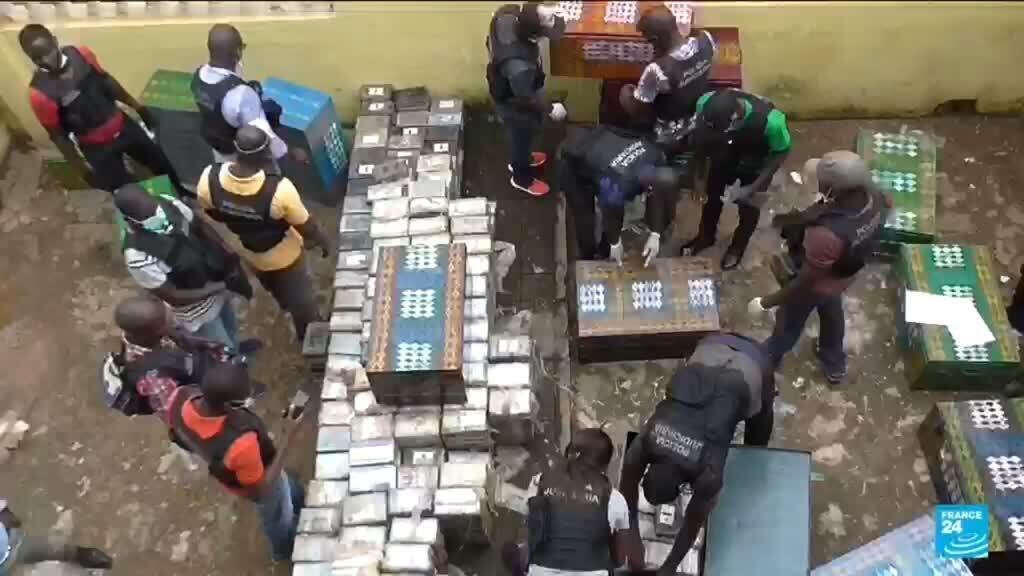
Guinea-Bissau: the name itself might not be on everyone's radar, but this small West African nation carries a weight far heavier than its size suggests. Since gaining independence from Portugal back in 1974, it's been a relentless cycle of instability, a seemingly never-ending loop of political crises, coups, and, increasingly, the corrosive influence of drug cartels.
Guinea-Bissau: Will This Crisis Be the Last?! The ...
Think about it: four successful coups in just five decades. That's almost one every twelve years! And that doesn't even begin to cover the *attempts* that failed, the near misses that still sent shockwaves through the country. The 2009 assassination of President Nino Vieira, a figure who had himself been involved in previous power grabs, was a particularly dark chapter, highlighting just how deep the rot had set in. Even in recent years, the clashes of 2021 and 2023 serve as stark reminders that the underlying tensions are far from resolved.
But it's not just political maneuvering and military takeovers that plague Guinea-Bissau. Poverty is endemic, a grinding reality for the majority of its citizens. Corruption, unfortunately, is woven into the fabric of daily life, hindering development and further marginalizing the poor. And then there's the elephant in the room: drug trafficking.
The United Nations has, in no uncertain terms, labeled Guinea-Bissau a 'narcostate'. It's a chilling term, isn't it? It paints a picture of a nation where cartels have essentially infiltrated state institutions, where the lines between government and organized crime have become dangerously blurred. It's easy to imagine how this kind of infiltration undermines the rule of law, fuels corruption, and makes it incredibly difficult for legitimate businesses and institutions to thrive. I mean, how can a country build a stable future when its own structures are being systematically eroded from within?
What's particularly disheartening is that these issues aren't isolated. They reinforce each other, creating a vicious cycle that's incredibly difficult to break. Poverty creates desperation, making people more vulnerable to the lure of quick money from the drug trade. Corruption allows cartels to operate with impunity, further weakening governance. And political instability creates a power vacuum that criminal elements are all too eager to fill. So, what's the solution? That's the million-dollar question, and honestly, there are no easy answers. It will require a multi-pronged approach – tackling poverty, strengthening institutions, combating corruption, and addressing the underlying factors that make Guinea-Bissau so vulnerable to cartel influence. It's a long and arduous road, but one that is absolutely necessary if Guinea-Bissau is ever going to escape this cycle of crisis.
Comments
Please sign in with Google to post a comment
No comments yet. Be the first to comment!