Rewriting Human History: Ancient Tool Discovery Pushes Back Origins of Technology
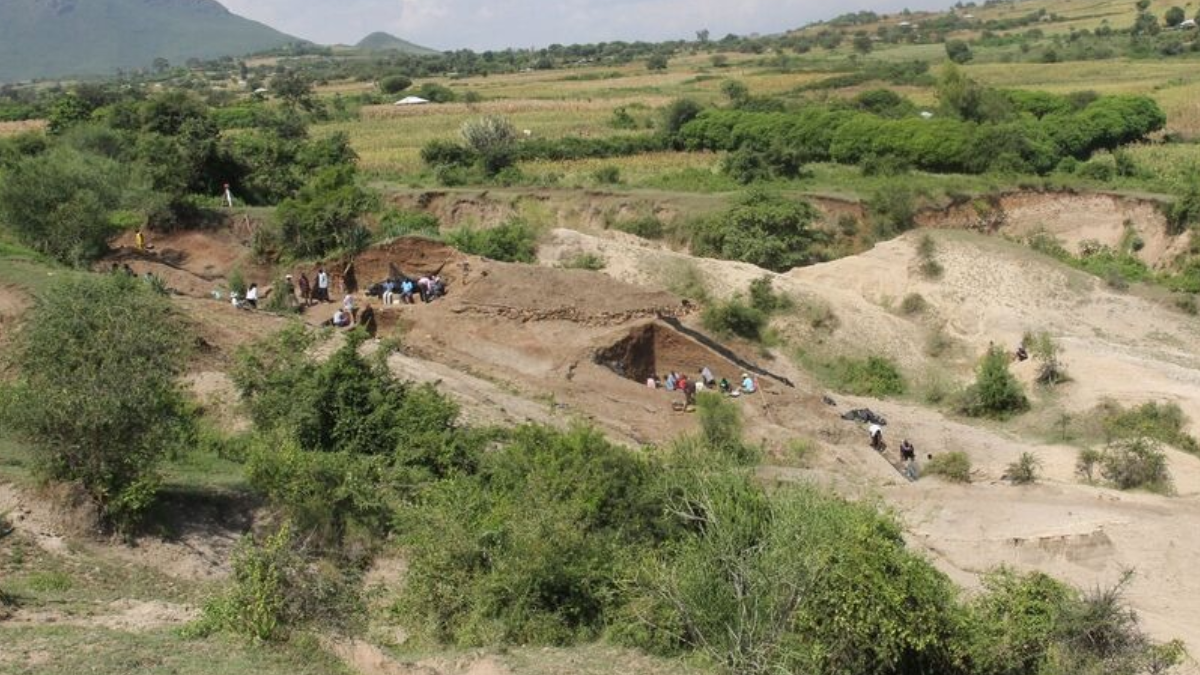
A groundbreaking discovery in Kenya has rewritten our understanding of early human history, suggesting that our ancestors were far more technologically advanced than previously believed. Excavations at the Namorotukunan archaeological site in the Turkana Basin have unearthed evidence of tool use dating back a staggering 2.75 million years, pushing the origins of human technology back by hundreds of thousands of years.
Blueprint of Humanity's Future: Groundbreaking DNA...
The findings, published in the journal Nature Communications, reveal a sophisticated understanding of tool creation and consistent application of technology by early hominins. The site yielded approximately 1,300 ancient tools, including sharp flakes, hammerstones, and stone cores, meticulously crafted and used over an extended period. Crucially, the tools were discovered in three distinct layers of sediment, each representing an earlier point in time, indicating continuous tool use rather than sporadic experimentation.
This discovery challenges the long-held belief
This discovery challenges the long-held belief that regular tool use began between 2.4 and 2.2 million years ago. Professor David Braun of George Washington University, a lead researcher on the project, emphasizes the significance of the find: "We've probably greatly underestimated these early humans and their ancestors. In fact, we can trace the origins of our ability to adapt to change using technology back much further than we thought, at least 2.75 million years ago."
Intriguingly, the early humans who crafted and utilized these tools possessed relatively small brains and physical characteristics that blended traits of chimpanzees and humans. Scientists believe these individuals may have belonged to the genus *Australopithecus* or a closely related species. This finding directly challenges the assumption that increased brain size was a prerequisite for tool use.
"We previously thought that tool use was linked to increased human brain size," explains Professor Braun. "However, what we see at Namorotukunan is that these tools were used long before the increase in brain size." This suggests that the relationship between brain development and technological innovation may be more complex than previously understood, potentially even indicating that tool use played a crucial role in driving brain evolution.
The tools themselves, shaped using the
The tools themselves, shaped using the "Oldowan" technique from rocks gathered from nearby riverbeds, provided early humans with a significant advantage in adapting to diverse environments, ranging from lush wetlands to arid grasslands. They facilitated access to food resources and enhanced their ability to survive in challenging conditions.
The decade-long excavation has revealed a picture of early humans as resourceful and adaptable beings, capable of sustained technological innovation. As Professor Braun concludes, "We thought tool use was a passing fad and then disappeared. However, when we saw the same practice repeated for 300,000 years, we realized this wasn't possible." This landmark discovery forces us to reconsider our understanding of the origins of human ingenuity and the pivotal role of technology in shaping our evolutionary journey.
Comments
Please sign in with Google to post a comment
No comments yet. Be the first to comment!