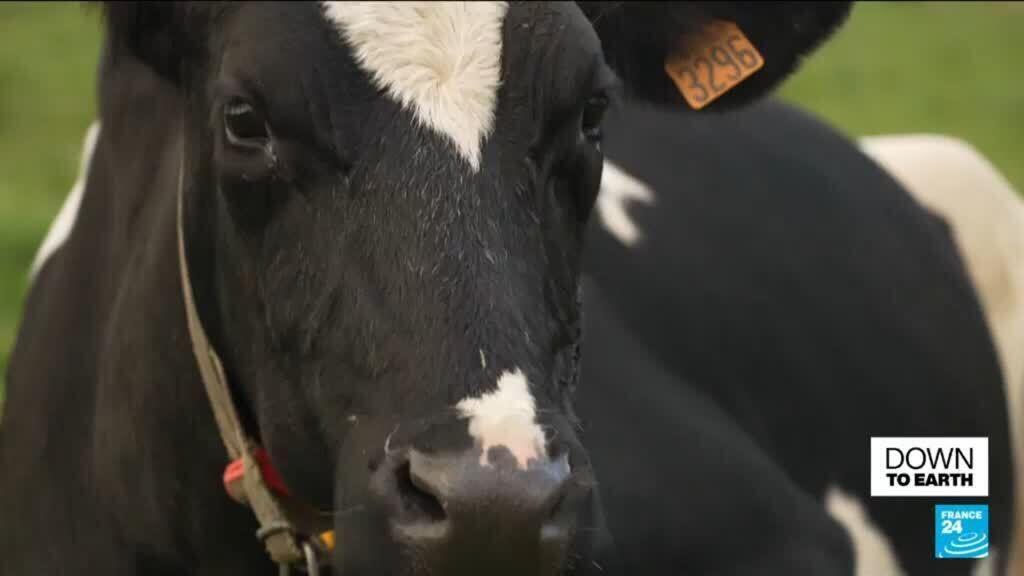
Alright folks, let's talk about cows. Specifically, the future of cows and how they might just help us tackle climate change. After the recent COP30 climate conference wrapped up in Brazil, the pressure is really on to find solutions across all sectors, and agriculture, with its methane-belching bovine contributors, is definitely in the spotlight. One cow, get this, can pump out between 154 and 264 pounds of methane *every year*. That’s a lot of greenhouse gas. But hold your horses, because the French might have something cooking – a smaller, more eco-friendly cow.
Future of Farming? France's Tiny Cows Could Revolu...
According to FRANCE 24's Charlotte Lam, there's a buzz in France around what they're calling the "cow of tomorrow." And no, we're not talking about some Frankensteinian lab creation. The solution, it seems, lies in good old genetics.
The idea is pretty straightforward: breed smaller cows that produce less methane. Makes sense, right? A smaller animal eats less, and therefore, *ahem*, produces less. What's particularly interesting is that they aren't necessarily sacrificing milk or meat production. Selective breeding aims to maintain yields while minimizing the environmental footprint. It's like having your cake and eating it too, at least potentially.
Now, I know what some of you are thinking: this sounds too good to be true. And frankly, it might be, at least in the short term. Genetic selection takes time. You can't just snap your fingers and have a herd of perfectly sized, low-emission cows. It's a process of careful breeding, monitoring, and analyzing data to ensure that you're actually moving in the right direction. It's not a quick fix, but more of a long game strategy. But honestly, in the face of the climate crisis, aren't we all in it for the long haul anyway?
Another aspect to consider is how these smaller cows will fare in different environments. Will they be as resilient to extreme weather conditions? Will they be as adaptable to different feed sources? These are important questions that need to be answered before we can truly declare victory. It's also important to look at the bigger picture: improved farming practices, better feed management, and even technological innovations like methane capture can all play a role in reducing the impact of livestock. It's definitely a multi-pronged approach. But still, the idea of a genetically tailored, eco-friendly cow? It's a pretty compelling vision of a more sustainable future. Let's hope the French are onto something here. I'll certainly be keeping an eye on this story as it develops.
Comments
Please sign in with Google to post a comment
No comments yet. Be the first to comment!