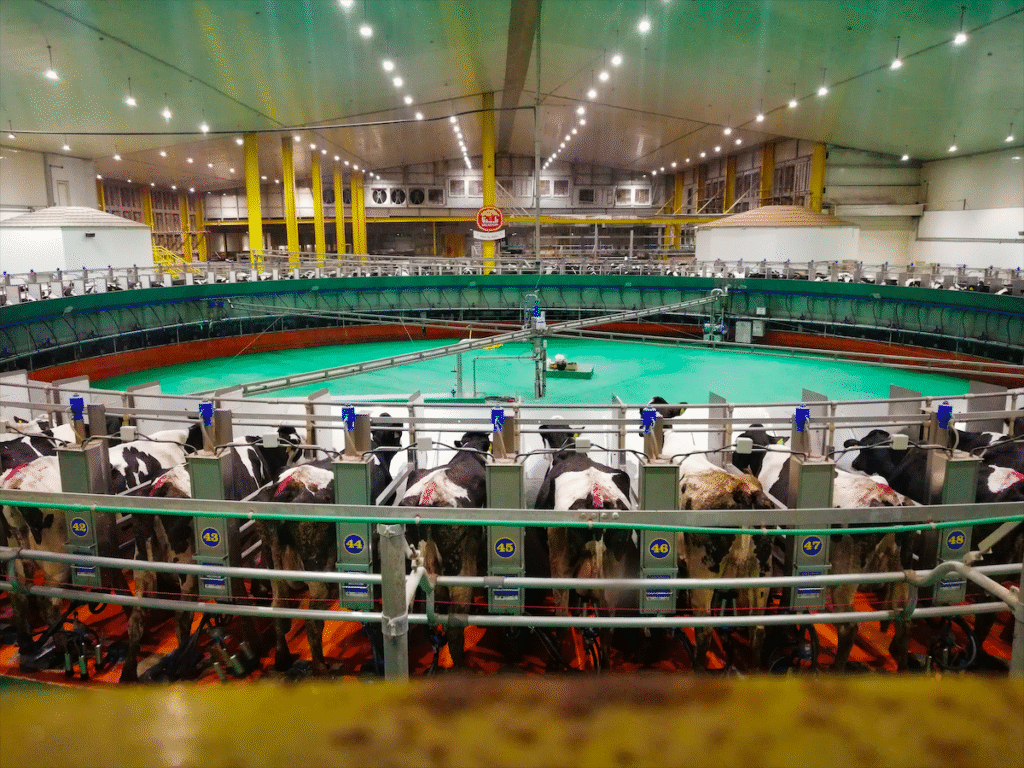
Germany is set to make a significant mark on Algeria’s dairy industry, and perhaps on North Africa’s food security as a whole. Industrial engineering giant GEA, known for its vast expertise in food processing and agricultural technologies, is teaming up with Qatari company Baladna to build what's being touted as one of the world's largest integrated dairy facilities right there in Algeria.
Germany's Mega Dairy in Algeria: What Does it Mean...
The driving force behind this ambitious project? Reducing Algeria’s heavy dependence on imported milk powder. This has been a long-standing concern for the country, and the new facility aims to seriously bolster Algeria’s domestic milk production. It's a smart move, especially given the current global uncertainties impacting supply chains. The project will bring large-scale dairy farming together with high-capacity processing units, meaning they’ll be producing everything from milk powder to other dairy staples, not just for local consumers but also with an eye on regional exports. I've noticed a definite trend of European firms looking beyond the EU for these kinds of large-scale agricultural endeavors, and this seems to be another prime example.
So, why Algeria? Well, it's a combination of factors. The country offers readily available land, access to reliable water resources (crucial, obviously, for a dairy operation), and government investment incentives designed to attract exactly these kinds of projects. In Europe, we often see limitations on land size, stricter environmental regulations, and more stringent policies on livestock management. Algeria’s regulatory environment allows investors to develop projects on an industrial scale, with long-term security and governmental support. They are clearly playing the long game here.
You might wonder why Spain or Morocco weren't chosen, given their more established agricultural sectors. While they have plenty to offer, they just couldn't match the specific combination of land availability, regulatory flexibility, and alignment with Algeria's national food security goals. Algeria's proactive approach to promoting agricultural self-sufficiency and large-scale production simply made it the most logical choice for a project of this magnitude. It's about having all the right pieces in place.
The facility itself will be quite impressive. Think a massive dairy farm capable of housing tens of thousands of cattle, coupled with a state-of-the-art milk processing and powder production plant built for serious industrial output. They're even planning a dedicated logistics and distribution system to efficiently supply both domestic markets and neighboring countries. By integrating everything from raising the livestock to processing and distribution, the project hopes to create a reliable supply chain, lessening the dependence on imported milk powder and solidifying Algeria's food independence.
GEA will bring its technical A-game to the table, implementing automated milking systems, climate-controlled storage, and advanced powder production technologies. This level of vertical integration leads to efficiencies that are much harder to achieve with smaller, more dispersed operations. Ultimately, it's about creating a modern, high-capacity industrial hub for dairy production in North Africa.
And it’s not just about the milk, of course. The project is anticipated to generate substantial economic benefits for Algeria. It will create jobs, foster the development of local supply chains, and facilitate the transfer of valuable skills in modern dairy technology. This initiative ties in beautifully with Algeria’s wider economic diversification strategy, showcasing the potential of large-scale industrial agriculture to boost both food security and domestic production capabilities. It's a win-win.
Comments
Please sign in with Google to post a comment
No comments yet. Be the first to comment!